
10 Warning Signs Your Calgary Home Needs a Roof Inspection Now

Updated: May 1

Quick Answer: Book a Calgary roof inspection within the week if you see active leaks, a sagging roofline, daylight through the attic, or granule pooling in gutters after a storm. Within the month, if shingles are lifted, ice dams keep returning, or you smell mould upstairs. Calgary's hail and freeze-thaw cycles compound minor signs into expensive damage quickly.
If your roof is leaking inside, the roofline is sagging, daylight shows through the attic, or you spotted granules pooling in the gutters after the last storm, book an inspection within the week. These are urgent signals. Calgary's combination of hail, freeze-thaw cycles, and Chinook winds creates damage patterns that look harmless from the ground but compound quickly into expensive repairs once water intrusion starts.
The 10 signs in this guide are sorted into three severity tiers so you can act in the right order:
Act now (this week): Active leak, sagging roofline, daylight in attic, post-hail damage
Act soon (this month): Granule loss, lifted shingles, recurring ice dams, mould smell
Watch and book: Roof age past lifespan, recent home purchase or sale
Severity tiers are not absolute (a small Tier 2 issue near a chimney can become Tier 1 after one Chinook), but they give you a working priority list. Below, each sign includes what it actually means, why Calgary makes it worse, and the right next step.
At a Glance
Quick Facts:
Tier 1 (act this week): 4 signs requiring urgent inspection
Tier 2 (act this month): 4 signs requiring inspection within 30 days
Tier 3 (watch and book): 2 condition-based triggers
Most Calgary-specific signs: Hail bruising, ice damming, Chinook wind lift on south slopes
Most often missed sign: Granule accumulation in gutters
Highest-cost sign if ignored: Sagging roofline (structural)
Tier 1: Act This Week
1. Active Leak or Fresh Water Stain Inside
Any new watermark on a ceiling or upper-floor wall means water is already inside the building envelope. The visible stain is downstream of the actual entry point, often by a metre or more. Trace the highest dry point, photograph the stain with a date, and book an inspection promptly. The cost gap between a $200 repair and a $4,000 drywall-and-insulation replacement is usually a matter of weeks.
2. Sagging or Dipping Roofline
Stand across the street and look at the roofline against the sky. A straight line is healthy. A visible dip, sag, or wave is a structural signal: water-rotted decking, compromised rafters, or excessive snow load. This is not a wait-and-see item. Structural repair gets exponentially more expensive once the deck fully fails.
3. Daylight Visible from Inside the Attic
Climb into the attic in the daytime with the light off. Visible daylight through the deck means you have a hole, a missing shingle, or a failed flashing seam. In Calgary's winter, that same opening lets snow blow in and melt against the insulation. Book a same-week inspection.
4. Post-Hail Aftermath (Even With No Visible Damage)
After any storm with 2 cm or larger hail, book an inspection within 30 days, even if nothing looks wrong from the ground. The Insurance Bureau of Canada consistently identifies hail as the largest single-cause property loss driver in Alberta. Bruising and granule mat damage often look intact for weeks before failure accelerates. Late inspections also narrow your insurance reporting window.

Tier 2: Act This Month
5. Granules Pooling in Gutters or Downspout Splash
Asphalt shingles are coated in ceramic granules that protect the underlying mat from UV. Granules in the gutters mean the protective layer is wearing through. A handful in the splash pan after the first heavy rain on a new roof is normal. A regular accumulation on a roof over 10 years old is an end-of-life signal. Book within 30 days for a remaining lifespan estimate.
6. Lifted, Curled, or Missing Shingles
Walk the perimeter and look at the roof edges. Shingles that curl up at the corners, lift along the edges, or have gone missing entirely are wind-failure or age-failure signs. Calgary's Chinook winds attack south- and west-facing slopes hardest. One lifted shingle is rarely catastrophic, but the next high wind widens the gap and exposes the underlayment.
7. Recurring Ice Dams Each Winter
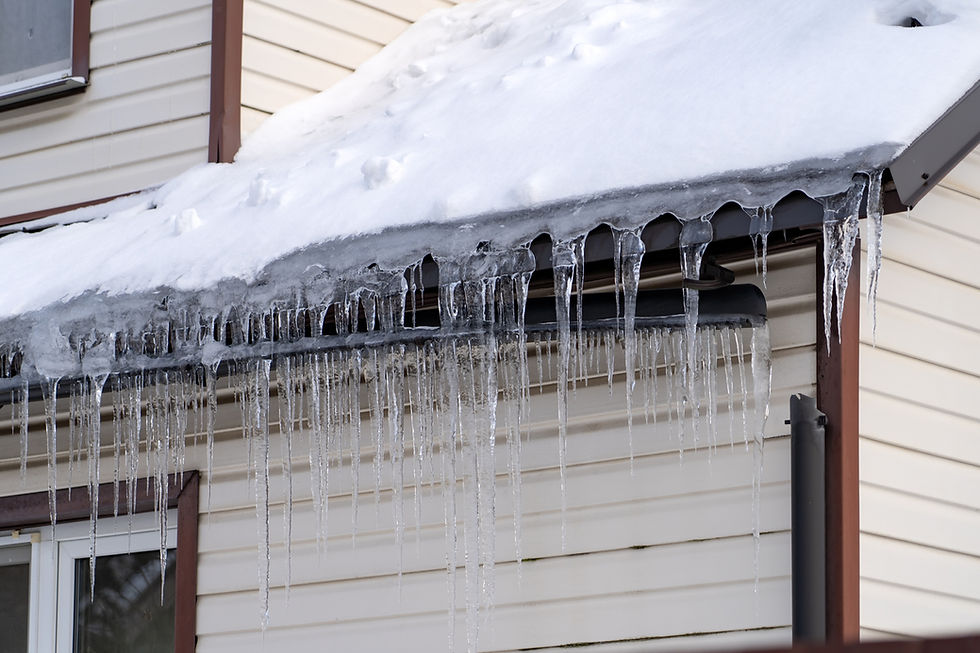
Ice dams form when warm attic air melts snow at the upper roof, which then refreezes at the cold eaves. The ridge of ice traps further meltwater, forcing it back under the shingles. If you see icicles forming a continuous ridge along the eaves every winter, you have a ventilation or insulation imbalance. The fix is rarely the ice itself; it is in the attic. Book an inspection that includes attic and ventilation diagnostics.
8. Mould Smell or Visible Mould in Upper-Floor Rooms
A musty or earthy smell in an upstairs bedroom, closet, or bathroom often traces back to the roof. Slow moisture intrusion through a flashing seam or compromised underlayment can feed mould in the attic insulation for months before it reaches the ceiling. Visible mould on an upper-floor wall or ceiling is the late-stage sign of a problem that started above.
If you've spotted any of these signs and are not sure how urgent it is, book a Calgary residential roof inspection. Angel's Roofing provides written reports with severity rankings so you know what to act on first. See the inspection service page.
Tier 3: Watch and Book
9. Roof Age Past Manufacturer Lifespan
Calgary's climate de-rates manufacturer lifespan estimates by 5 to 10 years for most asphalt products. If your standard 3-tab asphalt roof is past 18 years or your architectural asphalt is past 25, book an end-of-life assessment even with no visible problems. Catching the replacement window early lets you plan financing and timing rather than reacting to a leak.
10. Recent Home Purchase or Planned Sale
A general home inspector is not a roof specialist. If you bought a home in the past year and the roof did not get a specialist inspection, book one. If you are planning to sell, a clean dated inspection report shortens negotiation cycles. For both situations, the inspection is documentation that protects the transaction.
How These Signs Differ in Calgary
Most warning signs apply nationally. Three of them have specifically Calgary intensity:
Granule loss accelerates faster. Calgary's UV exposure (high elevation, low humidity, long summer days) wears asphalt granules faster than national averages. End-of-life on a standard 3-tab can arrive at 15 years rather than 20.
Ice dams are more common. The temperature swings of Calgary winters (Chinook warm spells followed by cold snaps) create the freeze-thaw conditions that ice dams need. Cities with steady winter temperatures rarely see them.
Wind lift hits the south slopes hardest. Chinook winds come from the southwest. South- and west-facing slopes age noticeably faster than north and east slopes. If you have lifted shingles on one slope only, check the wind exposure first.
For a deeper look at when each sign moves into the "must replace" category rather than "must repair," see Angel's Roofing's existing post on repair-versus-replacement decisions.
Frequently Asked Questions
Can I tell hail damage from the ground?
Sometimes, often not. Visible cracking, missing shingles, and dented metal flashing are easy to spot. Bruising of asphalt mats and minor granule loss are not. After any 2 cm or larger hail, assume there might be damage you cannot see and book a close inspection.
My ceiling stain is small. Do I really need to act this week?
Yes. The visible stain is the downstream end of an active leak. Drywall stains on upper floors can take days or weeks to appear after the actual roof breach started; by the time you see one, water has likely been migrating through insulation and decking for some time.
How do I tell granule loss from normal new-roof granules?
A new roof sheds loose surface granules in the first 2 or 3 rainfalls; this is normal. After that initial flush, ongoing accumulation in gutters indicates wear. A roof past 10 years old that produces a regular cup of granules per gutter clean is at or near the end of life.
What if I see two or three signs at once?
That is your inspection trigger. Multiple symptoms usually share a common upstream cause (ventilation imbalance, end-of-life shingle wear, or storm damage). A single inspection finds the root rather than chasing symptoms one by one.
Can a Chinook wind really damage a roof on its own?
Yes. Sustained Chinook winds above 80 km/h flex shingles, lift edges, and pry at flashing. On older roofs, especially, a single high-wind event can accelerate aging by months. Book a check after any sustained Chinook event with damage you can see from the ground.

About Angel's Roofing: Angel's Roofing provides comprehensive residential roof inspection services throughout Calgary, specializing in detailed written reports, photo documentation, and manufacturer-certified workmanship (GAF, IKO, VELUX, Euroshield, Malarkey) for homeowners requiring trusted protection of their property investment, backed by 25+ years of local Chinook, freeze-thaw, and hail experience.
Ready to schedule a thorough roof inspection backed by Calgary-specific expertise? Angel's Roofing helps Calgary homeowners catch issues early with comprehensive written inspection reports that document every finding, photos included.
Contact us today at 403-569-2643 to book your free roof inspection quote and start protecting your home.
Disclaimer: Roofing involves safety risks; consult licensed professionals for work beyond ground-level visual checks. Costs and specifications provided are estimates based on typical Calgary market conditions and may vary based on specific project requirements and current material pricing.



Comments