
Calgary Residential Roof Repair: The Complete Homeowner Guide

Updated: Jun 30

Quick Answer: Most Calgary residential roof repairs cost between $400 and $3,500 and take a half-day to two days to complete. The most common repairs in Calgary are pipe boot replacement, flashing repair, shingle replacement after wind events, and ice dam damage repair. Repair is the right answer until cumulative repair costs approach 50% of full replacement, at which point replacement is the better long-term spend.
Calgary's freeze-thaw cycles, Chinook wind events, and summer hail combine to produce a recognizable shortlist of residential roof repairs. Pipe boots crack. Flashing pulls away from chimneys after years of expansion and contraction. Shingles lift after a 100 km/h wind. Ice dams force water under shingle courses. The good news is that most of these are routine repairs, not catastrophic ones. A homeowner who understands the categories, costs, and decision points walks into a repair conversation knowing what's reasonable and what isn't. This guide covers the eight most common Calgary repairs, current 2026 pricing, leak diagnosis, component-specific fixes, emergency response, timelines, and the cost threshold where repair stops making economic sense.
At a Glance
Typical Calgary repair cost range: $400 to $3,500
Minor repair (single component): $400 to $800
Moderate repair (multiple components or sections): $800 to $2,000
Major repair (large section or structural): $2,000 to $5,000+
Most common Calgary leak source: Pipe boot failure
Typical repair duration: 2 to 6 hours for small jobs; 1 to 2 days for larger work
Repair vs. replace threshold: Repair stops making sense above ~50% of replacement cost
Calgary peak repair season: May through October (winter repairs limited to emergencies)
Lifespan of a quality flashing repair: 15 to 25 years
Lifespan of a quality pipe boot replacement: 10 to 20 years, depending on material
Key Takeaways
Calgary's climate produces a recognizable repair shortlist. Pipe boots, flashing, ice dam damage, and wind-displaced shingles cover most service calls.
Pipe boots are the #1 Calgary leak source. Inspect them every 5 to 7 years; replace at the first crack.
Leak entry points are rarely above interior stains. Systematic diagnosis from the inside out finds the real breach.
Match shingles by manufacturer line; expect a colour difference for 6 to 18 months. UV-aged shingles never match new ones perfectly.
Flashing repairs cost more than they look because they require removing surrounding shingles. Plan $800 to $2,500 per location.
Ice dam repairs need root-cause attention. Repairing visible damage without addressing attic insulation and ventilation guarantees recurrence.
Emergency response priority is to contain it inside first, then call. Climbing onto a wet roof in a storm is the most common DIY injury.
The 50% rule decides repair vs replace. Above 50% of replacement cost, replacement is the better economic choice.
The 8 Most Common Calgary Residential Roof Repairs
Calgary's climate produces a predictable repair list. These eight cover the majority of service calls Calgary roofers see in a typical year.
Pipe boot replacement. The rubber collar around plumbing vent stacks is the single most common leak source in Calgary. Freeze-thaw cycles split the rubber within 8 to 12 years.
Flashing repair. Chimney, skylight, and sidewall flashing pull away or crack after years of thermal movement. The fix involves removing surrounding shingles, replacing the flashing, and resealing.
Shingle replacement after wind damage. Chinook winds and prairie storms lift, crease, or remove shingles. Most homeowners notice missing shingles after a storm event.
Ice dam damage repair. Damage from winter ice dams typically shows up in spring as shingle lift, fascia damage, or interior water marks.
Vent and vent cap replacement. Attic vents, gable vents, and ridge vents fail or crack from UV exposure and hail.
Eavestrough and downspout repair. Damaged or improperly pitched gutters create water-management problems that show up as roof or fascia damage.
Skylight reseal or replacement. Older non-flashed skylights commonly leak; VELUX-system replacements solve the issue durably.
Decking and underlayment patches. Where leaks went undetected, the deck beneath shingles develops rot and needs sectional replacement.
Identifying which category fits your situation is the first step. Most homeowners will recognize their issue from the list above; a written assessment confirms the scope.
What Calgary Roof Repairs Actually Cost in 2026
Repair pricing depends on three factors: which component, how much surface area is affected, and roof access difficulty. The Calgary 2026 ranges below assume normal residential pitch and access.
Single-component minor repairs ($400 to $800):
One or two pipe boot replacements
Small section of shingle replacement (under 10 shingles)
Small flashing repair around a vent
Sealant repair around penetrations
Moderate repairs ($800 to $2,000):
Chimney flashing replacement
Skylight flashing replacement (existing skylight retained)
Section shingle replacement (one slope segment)
Multiple pipe boots and vent replacements together
Eavestrough repair plus fascia patching
Major repairs ($2,000 to $5,000+):
Full chimney flashing plus crown repair
Skylight replacement (VELUX or equivalent)
Decking replacement in a damaged section
Ice dam damage involving multiple components
Trip-charge and minimum visit costs add $150 to $300 to small jobs and often make sense to bundle with planned maintenance.
Free estimates are standard among reputable Calgary roofers, including Angel's Roofing. Finance options through Finance It cover most repair amounts when needed.
How to Find the Source of a Roof Leak
Leak entry points are rarely directly above interior stains. Water enters at one point, travels along rafters or sheathing, and emerges at a low spot in the ceiling, sometimes several feet from the actual breach.
The diagnostic process works from the inside out:
Identify the interior stain location and note ceiling features (light fixtures, joists).
Access the attic during or after a wet weather event. Daylight visible at any penetration or roof transition indicates an entry point.
Trace water staining on rafters and sheathing back to the highest point. Water always travels down; the highest stain point is closest to the entry.
Inspect the exterior side directly above the highest interior stain. Common culprits at this point are pipe boots, flashing junctions, valleys, or shingle damage.
Confirm with a controlled water test if the entry point isn't visually obvious. A garden hose run over suspect areas for 5 to 10 minutes with someone watching the attic identifies the breach.
A written professional assessment with deck-level photographs catches issues homeowners miss from ground level. Calgary roofs with 12+ years of age often show multiple sealant breakdowns at once; identifying just the most visible one leaves future leaks waiting.
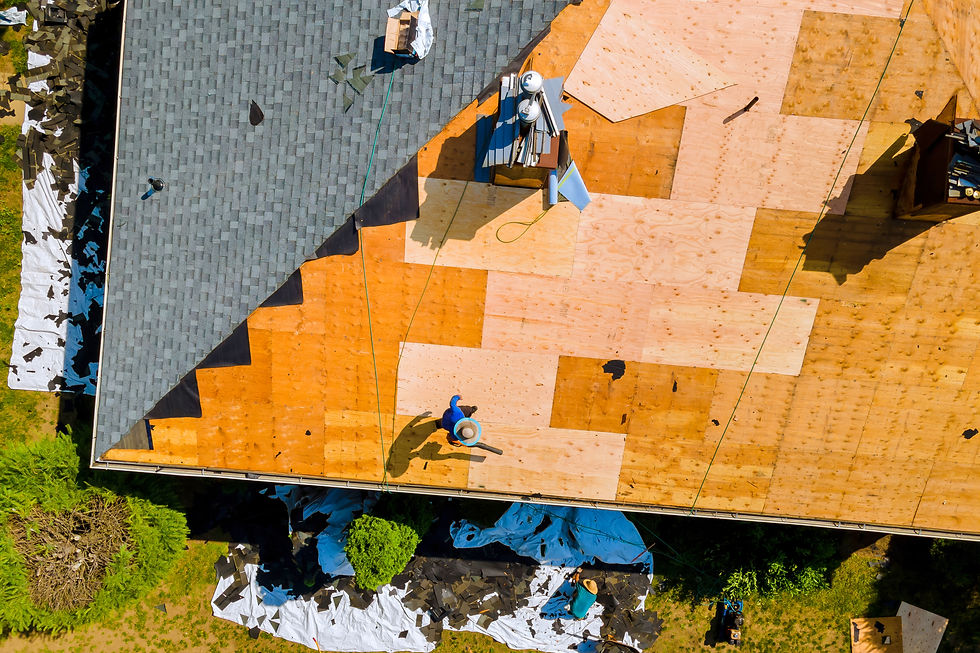
Shingle Repair: Lifted, Curled, or Missing Shingles
Shingle problems are the most visible Calgary repair category. After a wind event, homeowners often spot missing or flipped shingles from the street.
Lifted shingles lost their thermal seal between courses. They flap in the wind and let water under during driven rain. Resealing with manufacturer-approved roofing cement restores function on shingles under 10 years old.
Curled shingles have lost flexibility from age and UV exposure. Curling on more than one slope across the roof signals end-of-life; isolated curling can be replaced.
Missing shingles create an immediate water-entry risk. Replace within 2 to 4 weeks to prevent decking exposure to multiple rain or snow events.
Cracked shingles indicate either hail damage or material fatigue. Hail-related cracking is insurance claimable; fatigue cracking signals the roof is approaching replacement.
Matching aged shingles is the recurring challenge. Manufacturers (GAF, IKO, Malarkey) retain colour lines for years, but UV-aged shingles never match new shingles exactly. The colour difference fades over 6 to 18 months as the new shingles weather.
Repair cost for shingle work runs $400 to $1,500, depending on quantity and access.
Flashing Repair (Chimneys, Skylights, Sidewalls)
Flashing is the metal barrier where the roof plane meets a penetration or vertical surface. It's the highest-stress location on any roof because of constant thermal movement, and it's the second most common Calgary leak source after pipe boots.
Chimney flashing has three components: step flashing along the sides, counter flashing tucked into mortar joints, and a cricket (small slope) on the high side for chimneys wider than 30 inches. Calgary chimney repairs usually involve replacing step flashing and resetting counter flashing; mortar joint deterioration often needs masonry attention first.
Skylight flashing failure is common on older non-flashed-kit skylights. VELUX deck-mounted skylights use an integrated flashing kit that includes underlayment skirts, side flashings, and head flashing. Angel's Roofing is VELUX certified for these installations.
Sidewall and headwall flashing appear where a roof meets a wall (such as a dormer or addition). Improperly tucked or sealed sidewall flashing is a frequent leak source on homes built before 2005.
Valley flashing sits in the V where two roof slopes meet. Open valley flashing (visible metal) lasts longer than closed (woven shingle) valleys. Repair involves removing surrounding shingles, replacing the metal, and re-shingling.
Flashing repair costs typically run $800 to $2,500 per location.
Pipe Boot and Vent Repair
Pipe boots are the rubber collars around plumbing vent stacks. Standard EPDM rubber boots last 8 to 12 years in Calgary's climate before the rubber splits at the base of the cone. The split lets water down the stack and into the attic.
Detection: A pipe boot crack shows as visible splitting or dryness in the rubber, or as a water stain on a ceiling adjacent to a bathroom or kitchen plumbing wall.
Replacement materials: Three options exist. EPDM rubber (cheapest, shortest life). Lead boots (long life but environmental concerns, banned in some applications). Silicone-based or polymer boots (premium option with 20+ year life).
Repair process: Surrounding shingles lift, the old boot lifts off the stack, the new boot slips on, shingles re-seat with sealant, and the upper flange tucks under the higher shingle course. The full job runs 15 to 30 minutes per boot.
Pricing: $250 to $500 per boot for the first one (trip charge included), $150 to $250 per additional boot bundled in the same visit.
Vent cap and roof vent repairs follow similar logic. Plastic caps crack under hail or UV exposure; metal caps dent but rarely fail. Replacement is typically $200 to $400 per vent.
Ice Dam Damage Repair
Ice dams form when attic heat melts roof snow, which refreezes at the cold eaves edge. The dam traps subsequent meltwater, which works back under shingle courses.
Damage types after the dam thaws:
Lifted shingles where ice pried courses apart
Underlayment tears or perforations
Water marks on the fascia and soffit
Interior water staining on exterior walls below the eave
Deformed eavestroughs from ice weight
Repair timing: Wait until the dam fully thaws (usually March in Calgary), then schedule the assessment before May to catch hidden damage before spring rains.
Repair scope typically includes shingle replacement at the eave, underlayment patching, fascia and soffit repair, and gutter realignment.
Root cause repair matters as much as symptom repair. Insufficient attic insulation and poor ventilation drive ice dam formation. Adding insulation and improving soffit-to-ridge airflow is usually a $1,500 to $3,500 add-on that prevents recurrence.
Angel's Roofing's 25+ years of Calgary climate experience includes the insulation/ventilation diagnostic alongside the visible repair. Addressing only the symptom leaves the cause active for next winter.
Emergency Roof Repair (Active Leak)
When water is entering the home now, the priority order is to contain it inside, then call, then document, then repair.
Immediate steps (first 15 minutes):
Move furniture and valuables away from the leak area.
Place buckets, towels, and tarps to contain water on the floor.
Puncture the bulging ceiling drywall with a screwdriver to release pooled water (prevents larger ceiling collapse).
Cut power to any affected ceiling fixtures from the breaker panel.
Photograph everything for insurance.
Then call. Most Calgary roofers, including Angel's Roofing, offer same-day emergency response during business hours and after-hours response for active leaks.
Don't climb onto the roof in a storm. Wet shingles plus active wind plus residential ladder equals serious injury risk. Wait for a professional response or for the weather to pass.
Emergency tarping is the standard interim measure. A tarp installed over the damaged area protects the interior until weather permits permanent repair. Tarps last 1 to 6 months as a temporary measure.
After-hours emergency response typically adds a $200 to $400 trip surcharge to standard repair pricing.
How Long Calgary Roof Repairs Take
Most small Calgary repairs are completed within a half-day on-site.
Pipe boot replacement: 1 to 2 hours
Single shingle section repair: 2 to 4 hours
Chimney flashing replacement: 4 to 8 hours
Skylight replacement: 6 to 10 hours
Major sectional repair: 1 to 2 days
Ice dam damage with insulation work: 2 to 4 days
Weather delays affect Calgary repair schedules through winter (December through March), during active rain or snow, and during high-wind events. Reputable contractors schedule with weather buffer windows.
Booking lead times during peak season (June through August) often run 1 to 3 weeks. After major hail events, the wait stretches to 6+ weeks.
You don't need to be home for exterior-only repairs. Interior access is only needed when the repair involves attic work or interior damage assessment.

Repair vs Replace: The 50% Rule
When it comes to residential roof repairs, the choice between repair and replacement depends on cost, roof condition, and long-term value. Small repairs can extend roof life, but ongoing fixes may no longer make financial sense over time.
The 50% rule: When the repair quote approaches 50% of full replacement cost, replacement becomes the better long-term spend. The repair extends the existing roof by an average of 3 to 8 years; the replacement extends it by 25 to 30 years.
Age-adjusted thresholds:
Under 10 years old: repair is almost always correct
10 to 18 years: case-by-case; structural and decking condition matters most
18+ years: lean toward replacement except for very minor repairs
Cumulative repair costs over a 3-year window also matter. Three separate $1,500 repairs in 18 months on a 17-year-old roof signal that replacement should be evaluated.
Structural decking damage is the hard trigger for replacement. When decking has rotted through multiple sections, repair stops being a viable strategy.
A written assessment with decking inspection (not just shingle inspection) is the basis for the right call. Angel's Roofing's written assessments document both visible and substrate conditions to support the decision.
Frequently Asked Questions
How much does a typical Calgary roof repair cost in 2026?
Most single-component Calgary repairs run $400 to $800. Moderate multi-component or sectional repairs run $800 to $2,000. Major repairs involving structural work or skylight replacement run $2,000 to $5,000+. The most accurate number for your situation comes from a free written estimate.
Will my insurance cover the repair?
Insurance covers damage from sudden events (hail, wind, falling trees). Insurance does not cover damage from gradual wear (aged pipe boots, end-of-life shingles). The trigger event determines coverage. Most Calgary repair claims are wind or hail-related.
Can I repair my own roof?
Some repairs are within DIY range: sealant touch-up, single shingle replacement, gutter cleaning. Most are not. Pipe boot replacement, flashing work, skylight resealing, and any structural work require professional skill and safety equipment. Calgary's wind exposure and steep residential pitches make DIY roof work the leading source of household ladder injuries.
How fast can someone come out for an active leak?
Most reputable Calgary roofers offer same-day response during business hours for active leaks and after-hours response for emergencies. Angel's Roofing's full-time safety coordinator has 25+ years of experience in operations support for rapid emergency dispatch.
Does a roof repair carry a warranty?
Reputable Calgary roofers warrant their repair workmanship for 1 to 5 years. Replacement materials (shingles, flashing, boots) carry the manufacturer's product warranty (typically 10 to 50 years, depending on material). Always ask for the written warranty terms before approving the work.
Will the repair affect my shingle manufacturer's warranty?
Repairs performed by certified installers using matching manufacturer materials preserve the original warranty. Repairs done outside this scope can void coverage. Angel's Roofing's GAF, IKO, and Malarkey certifications ensure repairs done under those product lines stay within warranty.
Should I get multiple repair quotes?
For larger repairs ($1,500+), yes. For small repairs, the trip-charge math usually doesn't favour shopping. Verify the contractor's certifications, BBB rating, and written assessment process rather than chasing the lowest quote on small jobs.

About Angel's Roofing: Angel's Roofing provides Calgary residential roof repair throughout Calgary and surrounding areas, specializing in pipe boot replacement, flashing repair, ice dam damage repair, and emergency leak response for homeowners requiring fast, written-assessment-backed service from a 25+ year local team.
Ready to fix your Calgary roof before small damage becomes expensive damage? Angel's Roofing helps Calgary homeowners protect their investment with written assessments, GAF, IKO, Malarkey, Euroshield, and VELUX certified workmanship, full-time safety coordination, and Finance It options on larger repairs.
Contact us today at 403-569-2643 to book your complimentary roof repair assessment.
Disclaimer: Roofing involves safety risks; consult licensed professionals for work beyond ground-level visual checks. Costs and specifications provided are estimates based on typical Calgary market conditions and may vary based on specific project requirements and current material pricing.


Comments