
Solar Panel Maintenance and Snow Management in Calgary


Quick Answer: Calgary solar panels are largely self-maintaining. Snow usually slides off within hours to a couple of days thanks to panel tilt (15° to 40°), dark glass absorbing solar heat, and a smooth glass surface. Annual cleaning once or twice per year handles pollen, dust, and bird droppings. Never climb on an icy roof to clear snow; wait for natural shedding or melt.
The maintenance question stops many Calgary homeowners from committing to solar. The reality is much less work than expected, especially when it comes to solar panel maintenance and snow management in Calgary. This guide covers what panels actually need, what they don't, and how to monitor winter performance without doing anything dangerous.
At a Glance
Cleaning frequency: Once or twice per year (spring + late summer)
Snow shedding time: Typically hours to 2 days
December production: Roughly 30% of June production (not zero)
Winter production loss from snow days: Estimated 5% to 10% of annual output
Lifespan with normal maintenance: 25 to 30 years
Annual professional inspection: Recommended but not strictly required
Roof access risk: Highest December through March; avoid climbing entirely
How Snow Behaves on Solar Panels
Three physical factors make snow shedding easier than homeowners expect:
Tilt angle. Calgary residential roofs typically pitch at 4:12 to 8:12 (18° to 34°). Panels sit flush with the roof at the same angle. Snow on an angled smooth surface slides under gravity once the lower contact layer melts.
Dark glass surface. Solar panel glass absorbs solar heat efficiently. Even on cold winter days with sun, the panel surface warms above ambient air temperature, softening the snow-glass contact layer.
Smooth surface. Solar panel glass is smoother than asphalt shingles, providing less friction for snow to grip.
The combination means most Calgary snow events clear from panels within hours of the storm ending, sometimes a day or two for heavy wet snow. Light powder snow often blows off before it accumulates.
Winter Production Reality
December is the lowest production month in Calgary. Typical December output runs 25% to 35% of June output for the same system. Factors:
Shorter days. December daylight is about 8 hours; June is about 16 hours.
Lower sun angle. Solar irradiance per panel is lower when the sun is low.
Snow days. Days when panels are partially or fully covered.
Cold compensates partially. Panel efficiency improves in cold; a clear -10°C day with sun produces well.
Annual estimates account for all of this. A 6 kW Calgary system producing 7,800 kWh/year typically generates:
April to September: ~4,700 kWh (60% of annual)
October to March: ~3,100 kWh (40% of annual)
December alone: ~250 to 350 kWh (3% to 5% of annual)
Net metering smooths the seasonality on the bill. Summer surplus credits cover winter consumption.

When (and Whether) to Clear Snow
The default answer is: don't.
Roof climbing in winter is dangerous. Snow plus ice plus pitched surface plus cold-stiffened roofing materials equals high fall risk.
Panels usually clear themselves. Days with sun melt the contact layer; panels then shed in chunks.
The production loss from a few snow days is small. A week of mostly-covered panels in December might cost 30 to 50 kWh, worth $2 to $4 at retail electricity prices.
If a homeowner insists on clearing, the only safe approaches are:
Roof rake from the ground with a soft head designed for solar (rigid metal rakes scratch panels). Reach is limited; only ground-floor and shallow upper-floor panels are accessible.
Wait for partial melt and let gravity do the rest. A few hours of direct sun on a sunny -5°C day usually clears panels.
Hire a professional solar cleaning service during their off-season visit if a long stretch of snow accumulation worries you.
Never:
Climb on the roof in winter. Fall risk is unacceptable for $5 of production.
Use abrasive tools (metal scrapers, ice picks) on the glass surface.
Pour hot water on cold glass (thermal shock can crack tempered glass).
Walk on the panels themselves. Panels are not designed for foot traffic; cell damage can result.
Annual Cleaning Schedule
Most Calgary homes need cleaning once or twice a year. Schedule:
Spring cleaning (May or June):
Winter dirt, pollen accumulation as trees bloom, leftover snow grit. This is the highest-value cleaning because production ramps into the high-output summer months.
Late summer touch-up (August or September) if needed:
Heavy dust from a dry summer, bird droppings, smoke residue from regional wildfires (Calgary's air quality during wildfire smoke events can leave a film). Optional in clean-air years.
Cleaning is typically performed by:
The solar installer (Angel's offers cleaning as an add-on service)
A dedicated solar cleaning company
A general window cleaning service that handles solar
Cost runs $100 to $250 per visit for typical residential systems. DIY cleaning with a soft brush, deionized water (to avoid streaks), and a roof safety harness is possible, but most homeowners contract it out for the safety equipment alone.
Monitoring as Maintenance
The monitoring app is the most useful maintenance tool. Daily and weekly review reveals:
Production drops that signal soiling, shading changes (new tree growth), or panel issues
Panel-level performance (with microinverters) showing which panel underperforms
Inverter fault codes triggering early service calls
Net consumption vs production for bill estimation
A common pattern: production drops 5% to 10% gradually over 2 to 4 weeks signals accumulated dirt or pollen. Scheduling a cleaning at that point restores output. Sudden drops signal hardware issues requiring service.
Annual Professional Inspection
Some Calgary homeowners schedule an annual or every-other-year inspection covering:
Visual inspection of panels for damage, soiling, mounting integrity
Racking and flashing check for water-tightness
Wiring and connector inspection for corrosion or damage
Inverter status review including firmware updates
Monitoring data analysis comparing actual vs predicted production
Cost runs $150 to $300. Not strictly required but useful for capturing minor issues before they become production problems or warranty matters.
What Hail Does to Maintenance Schedule
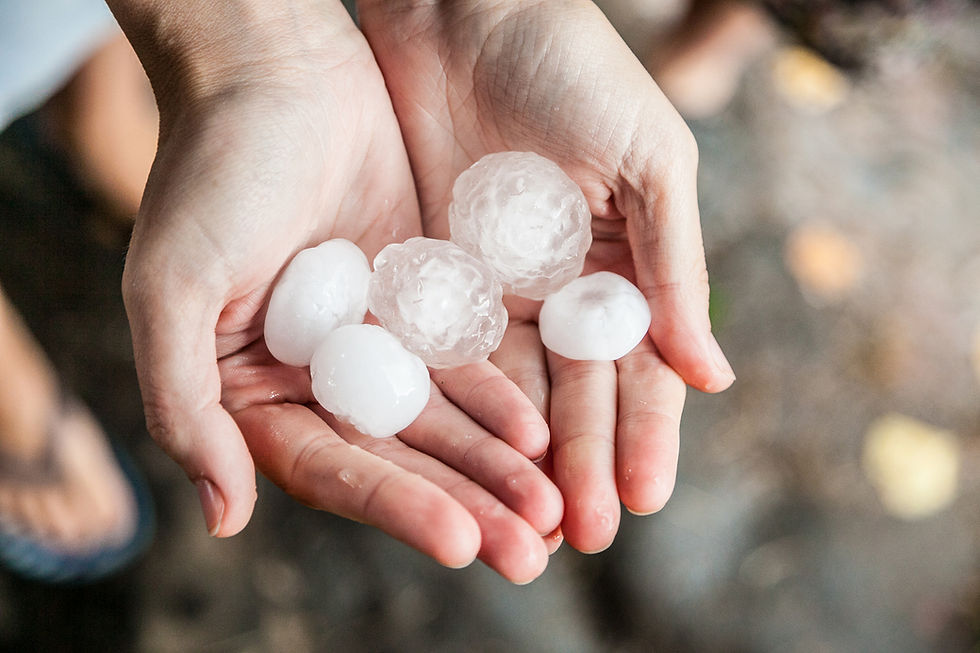
After any major Calgary hailstorm, monitor production closely for 1 to 2 weeks. Damage from a storm often doesn't show visually but produces measurable production drops. This makes solar panel maintenance and snow management in Calgary part of a broader year-round maintenance approach: routine cleaning and safe snow shedding require little hands-on work, while post-hail monitoring helps identify problems before they become more serious. The hail resistance article covers post-storm inspection and insurance.
Frequently Asked Questions
Will rain clean my panels?
Mostly yes. Calgary rain (when it happens) removes light dust and pollen reasonably well. Heavy rain after a dry spell often clears panels enough to restore production. Stubborn deposits (bird droppings, sap, smoke film) require manual cleaning.
What about bird droppings?
These are the most common cleaning trigger. Concentrated droppings can create localized hot spots on a panel cell, which over time can damage that cell. Scheduling a cleaning when droppings accumulate (visible on monitoring as panel-level production drops, or visually if you can see panels from the ground) protects panels.
Is robot cleaning worth it?
Generally no for residential. Robot solar cleaners are designed for large commercial arrays with thousands of panels. Residential cleaning costs $100 to $250 a couple of times a year; robot systems cost thousands.
Do panels need annual professional service?
Not strictly required. Most warranties don't mandate annual service. A homeowner watching their monitoring app and scheduling cleaning as needed handles 90% of what an annual service would catch. Inspections every 2 to 5 years are reasonable for peace of mind.
Should I do anything to prepare for winter?
Minimally. Confirm monitoring is active before the snow starts (so you can see production changes), check that wiring conduit isn't damaged from summer wildlife or UV, and review the app for any pre-existing issues. That's it.

About Angel's Roofing: Angel's Roofing provides Calgary residential solar installation throughout Calgary and surrounding areas, specializing in low-maintenance solar designs with performance tracking software for homeowners requiring straightforward ongoing care.
Ready to install a low-maintenance solar system in Calgary? Angel's Roofing helps Calgary homeowners design photovoltaic systems matched to their roof and orientation, backed by performance tracking software and 25+ years of Calgary winter experience.
Contact us today at 403-569-2643 to book your free residential solar consultation.
Disclaimer: Roofing involves safety risks; consult licensed professionals for work beyond ground-level visual checks. Costs and specifications provided are estimates based on typical Calgary market conditions and may vary based on specific project requirements and current material pricing.


Comments