
Things You Didn’t Know About Waterproofing Systems for Commercial Roofing
- Angel's Roofing

- Jan 21
- 3 min read
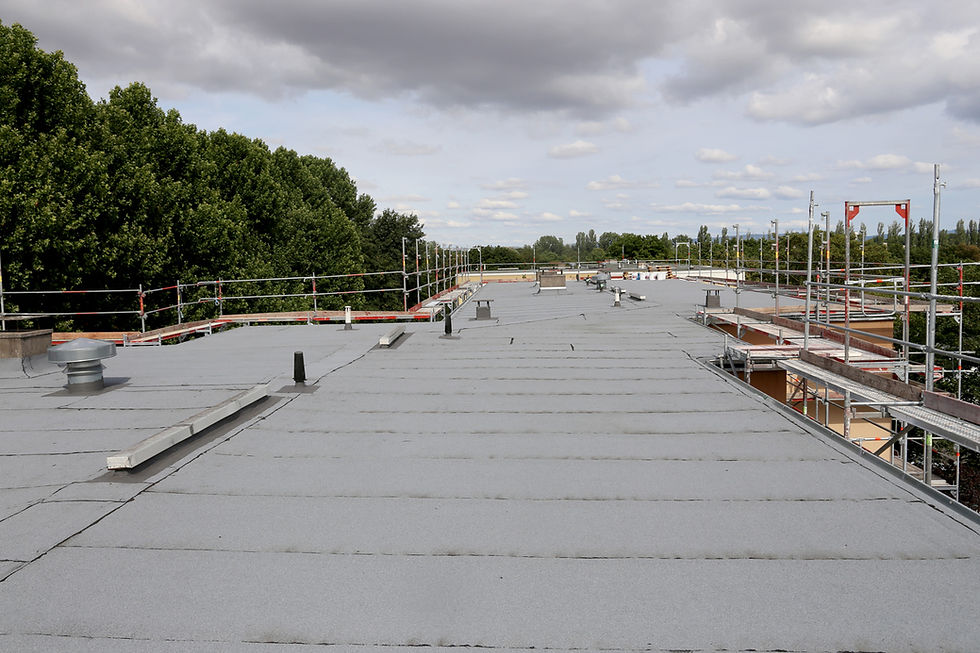
The lack of waterproofing in buildings can be problematic in Alberta during wet seasons. When snow and rainfall, a building’s first line of defence is its roof. Commercial buildings are usually flat-roofed and elevated, making them more vulnerable during the wet season. If a building doesn’t have a proper waterproofing system installed, it will deteriorate the rooftop and cause leaks in the interior.

To improve a building's waterproofing, we recommend 3 types of roofing materials to repel water and ensure structural safety.
The Best Roofing for Waterproofing Systems
SBS Roofing

Styrene-Butadiene-Styrene is an asphalt-based and rubber synthetic material designed for commercial roofing, especially for buildings with flat roofing structures. It’s also called Torched-On Roofing.
Single Ply Roofing

A long, rectangular sheet of synthetic rubber is best suited for industrial site buildings, ideally for slightly sloped flat roofs. Single Ply Roofing can cover a wide length of your roofing surface.
Metal Roofing

Metal materials, such as steel, are among the most durable and energy-efficient roofing options for buildings. However, despite being the most durable, it eventually rusts. But if an acrylic coating is applied to your metal roofing, it rivals other roofing options for waterproofing.
Parts of Waterproofing Systems
Installing the best materials is not sufficient to prevent rainwater and melted snow from running off a building's roof. Commercial buildings require certain parts to safely extract water.
Scupper

The scupper is the opening on the sides of a building that drains accumulated water directly from the roof. A scupper is effective in short buildings because winter freezes the water, which can cause a blockage.
Gutter

A horizontal passageway for rainwater. Just like a scupper, the gutter is responsible for catching and releasing the water to the ground. A scupper and a gutter work together in tall buildings to discharge water from the roof.
Interior Drainage

Interior drainage is flat-surfaced drainage on the roof, connected by long pipelines or tubes to direct leakage down to the basement level, where it reaches the soil stack. In a snowy province like Alberta, taller buildings require interior drainage to address winter hazards rather than relying solely on freeze-prone scuppers and gutters. The pipes and tubes are cold-resistant, so the low temperature won’t freeze the water gushing down the drain.
Water Tank
Another alternative for water destinations is to harvest it into a water tank. The filtered rainwater collected can be purified and reused for irrigation systems in the building area. But when the water tank is at maximum capacity, the excess water will be discharged into the sewage system.
Gravel or Tar on Your Rooftop
Gravel and tar are used for building insulation because of their low freezing point, and both elements melt ice and snow faster than usual. On top of that, gravel and tar also enhance a building's waterproofing system. The high hydraulic conductivity of gravel and tar allows liquids to flow smoothly, making it easier to reach the drainage.
The Heat of the Building
The overall warmth of the building interior is a massive factor in evaporating water. The building's electrical, heating, and lighting systems emit warm energy, helping moisture dry quickly and preventing mould. Sometimes, the water doesn’t reach the soil sack because the heat has already evaporated the leaks before the water reaches the roof.
Less Maintenance but Must be Inspected Often
A monthly building inspection is necessary for commercial roofing. The bigger the building, the harder it is to detect problems. There’s no substantial risk of getting a non-roofing expert to inspect rooftops. However, it is recommended to consult professionals to perform any maintenance.
The priority is the safety of occupants. A proper waterproofing system on commercial roofing reduces roof deterioration and the risk of mould. Consider installing SBS, Single Ply, or Metal Roofing to ensure the durability and waterproofing of a commercial roof.
Need a Waterproofing System?
Proper installation of waterproofing systems for commercial roofing is essential in Alberta. Angel's Roofing has over 25 years of experience delivering commercial roofing services. We can install a waterproofing system for your establishment to ensure the best anti-leakage roofing in the city.


Comments