
What Hail Damage Roof Repairs Actually Include (Process Guide)


Quick Answer: A Calgary hail damage roof repair typically includes replacing damaged shingles, dented flashing, cracked vent caps, damaged skylight components, and bent gutters, with underlayment patching and decking inspection as needed. The full process takes 1 to 3 days, runs from $1,500 to $5,000 for most insurance-scope repairs, and includes written assessment, scope documentation for the adjuster, the repair work itself, magnet sweep cleanup, and final walk-through. You don't need to leave the home during repairs.
Knowing exactly what crews do during a hail repair removes most of the stress around scheduling, cost, and the days they're on site. The work follows a predictable sequence: scope confirmed, materials ordered, repair day, cleanup, walk-through. Most Calgary homeowners are surprised by how quickly the work wraps once it starts. This guide walks through each stage of the process and the line items that typically show up on a hail repair scope.
At a Glance
Typical repair timeline: 1 to 3 days on site once materials arrive
Typical Calgary scope: $1,500 to $5,000 for insurance-covered repairs
Time from claim to start: 2 to 6 weeks during peak storm season
Crew size: 3 to 6 roofers depending on scope
You can stay home: Yes, the work happens outside
Cleanup standard: Magnet sweep for all dropped nails and fasteners
Warranty on workmanship: Typically 5 to 10 years depending on contractor
Step 1: Written Assessment and Scope
Before any work happens, a contractor inspector climbs the roof and produces a written assessment. The assessment includes:
Deck-level photos of every damaged area
Itemized list of damaged components (shingles, flashing, vents, skylights, gutters)
Repair-versus-replace recommendation for each component
Cost estimate broken down by line item
Timeline estimate
Material specifications
The assessment is the document that goes to your insurance adjuster. If the adjuster's original scope missed damage that the contractor identified, the written assessment plus photo evidence is the basis for a supplemental claim. A reputable Calgary contractor produces this document as part of the free initial consultation, not as a paid deliverable.
Step 2: Insurance Scope Reconciliation
The contractor's scope and the adjuster's scope rarely match exactly on first pass. The contractor's job is to reconcile them:
Confirm the adjuster's authorized line items
Identify gaps where the contractor sees damage the adjuster missed
File supplemental claim documentation with photo evidence
Coordinate any re-inspection if the adjuster wants to verify additional damage
This stage takes anywhere from a few days to a few weeks depending on adjuster availability and claim complexity. Major storm events extend the timeline because adjusters are processing hundreds of claims simultaneously.
Step 3: Material Order and Scheduling
Once scope is final and approved, the contractor orders materials. Calgary material lead times during peak hail season (June through August) run 1 to 3 weeks for matching shingles and longer for specialty items like VELUX skylights or specific flashing profiles.
Scheduling typically lines up:
Material delivery to the home or yard
Crew assignment
Permit (if required for the scope; most simple repairs don't require permits in Calgary)
Dumpster placement (only for larger repair scopes)
Confirmed start date with weather contingency
The homeowner is contacted with a confirmed start date once materials are in hand and the weather window is workable. Calgary's weather adds 10% to 30% to most repair schedules in spring and fall.
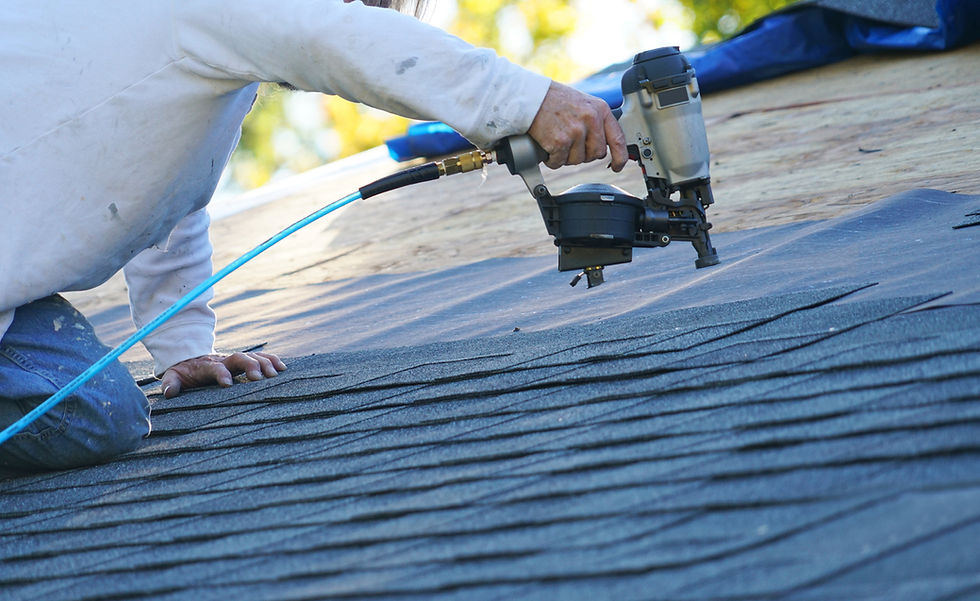
Step 4: Shingle Repair Work
This is the most common line item. The crew:
Identifies the damaged sections. Marked from the written assessment, verified on the roof.
Carefully lifts the surrounding shingles to break the thermal seal without tearing intact shingles.
Removes damaged shingles. Nails pulled, debris bagged.
Inspects underlayment. Patches where exposed during shingle removal.
Installs new shingles. Matched as closely as possible to existing colour and profile.
Re-seals adjacent shingles. Roofing cement applied to bond the new shingles into the existing course.
Photographs the completed work for warranty documentation.
Shingle replacement is rarely a single-shingle job. Adjacent shingles often need to come up to allow proper tie-in, so a 4-shingle damage area might mean 8 to 12 shingles being touched.
Step 5: Flashing, Vents, and Penetrations
Flashing and vent damage is the second most common scope item. Components addressed:
Step flashing at sidewalls and chimneys. Bent or punctured flashing is removed and replaced. The shingles around the flashing are carefully lifted to allow the replacement.
Pipe boots and plumbing vent stacks. Cracked rubber boots are replaced; metal vents that took direct hits are swapped.
Attic vents and box vents. Dented or cracked vents are replaced with matching profiles.
Ridge vents. Damaged sections are cut out and replaced; cap shingles are reinstalled.
Drip edge. Bent or dented drip edge along eaves is removed and replaced.
Flashing work is one of the highest-skill parts of a hail repair. Poor flashing replacement is the most common source of post-repair leaks within the first 12 months.
Step 6: Skylight Repair or Replacement
If the assessment flagged skylight damage, the crew either replaces glazing (when only the outer pane cracked) or swaps the full unit (when the frame or seals were compromised). Angel's Roofing is VELUX certified, which matters because VELUX skylights have specific installation steps and warranty requirements that uncertified crews often miss.
Skylight work involves:
Removing the surrounding shingles and flashing
Lifting the old unit out
Installing the new flashing kit
Setting the new unit and connecting any electrical (powered units only)
Re-flashing and re-shingling around the unit
Skylight replacement typically adds 4 to 6 hours to the repair timeline per unit.
Step 7: Gutter and Downspout Work
Hail dents gutters from above. Sections with deformation that affects drainage are replaced. Cosmetic dents that don't affect water flow are left in place unless the homeowner pays the difference for replacement.
Downspouts that took direct hits get the same evaluation. Most downspouts survive hail; gutters are the more vulnerable component because they're horizontal and presented broadside to falling hail.
Step 8: Cleanup and Magnet Sweep
End-of-day cleanup is non-negotiable. Crew responsibilities:
Dumpster loaded with debris (or pickup truck loaded for smaller scopes)
Magnet swept across lawn, driveway, and walkways to catch dropped nails and screws
Tools collected and accounted for
Visual sweep around the perimeter of the home for fallen shingle pieces
A reputable Calgary contractor finishes the day with the site cleaner than when they started. The magnet sweep is the part homeowners notice most because dropped roofing nails in a driveway become flat tires fast.
Step 9: Final Walk-Through and Warranty
The repair closes with a walk-through:
Contractor inspector reviews the completed work with the homeowner from the ground
Photos of the finished repair are provided
Workmanship warranty document is signed
Insurance paperwork is finalized (release of payment, lien waiver if applicable)
Workmanship warranties on Calgary hail repairs typically run 5 to 10 years. Manufacturer material warranties continue per the original shingle product's terms. Angel's Roofing backs all repair work with a written Satisfaction Guarantee in addition to the workmanship warranty.

What's Usually Not Included
Knowing what hail damage roof repairs actually include helps Calgary homeowners understand what’s covered and which repairs may require separate work.
Some items are commonly assumed to be in scope but typically aren't:
Interior damage repair. Water-stained drywall, attic insulation replacement, ceiling repaint. These are usually a separate claim handled by interior trades.
Tree limb removal. If branches landed on the roof during the storm, removal is typically arborist work.
Painted surface refinishing. Vents and flashing replaced are typically not painted to match adjacent painted surfaces unless explicitly added to scope.
Soffit and fascia repair. Separate scope unless the hail event also damaged these components and they were itemized in the original assessment.
Confirm what's in and out of scope before the work starts to avoid surprises.
Frequently Asked Questions
Do I need to be home during the repair?
No. The work happens outside. Most Calgary homeowners go to work as normal during a 1- to 3-day repair. The contractor may ask for attic access at some point for confirmation work; that's a 10-minute window typically scheduled in advance.
Can I stay in the home during repairs?
Yes. Noise is the main consideration. The day's work includes hammering, drilling, and material handling overhead. Most families work, run errands, or take kids out for part of the day. The home is fully habitable.
What happens to my insurance deductible?
You pay the deductible to the contractor directly, usually at the end of the work or as scheduled in your contract. The insurer pays the rest of the scope amount. Some Alberta contractors will quote the deductible-waiver pitch; this is illegal in Alberta and a reliable scam indicator.
Will the new shingles match the existing roof?
Closely, not perfectly. Shingle manufacturing colour shifts slightly over years, and granule weathering changes the existing roof's tone. A skilled installer minimizes the visual difference. For a 5-year-old roof, the match is usually undetectable from the ground; for a 15-year-old roof, the new shingles may look slightly newer for 6 to 12 months until weathering catches up.
How do I know the work was done properly?
Photo documentation before, during, and after. A reputable contractor provides photos of the completed repair as part of the final walk-through. Workmanship warranty paperwork plus the contractor's BBB accreditation and manufacturer certifications (GAF, IKO, Malarkey, VELUX) are the trust signals beyond the photos.

About Angel's Roofing: Angel's Roofing provides Calgary residential hail damage repair throughout Calgary and surrounding areas, specializing in comprehensive scope documentation, certified shingle and skylight installation, and full magnet-sweep cleanup for homeowners requiring trusted post-storm repair.
Ready to schedule your Calgary hail damage repair with a contractor who handles the full process? Angel's Roofing helps Calgary homeowners with written assessments, insurance scope reconciliation, GAF, IKO, Malarkey, VELUX, and Euroshield certified installs, and a 25+ year reputation backed by a BBB-accredited Satisfaction Guarantee.
Contact us today at 403-569-2643 to book your complimentary hail damage repair assessment.
Disclaimer: Roofing involves safety risks; consult licensed professionals for work beyond ground-level visual checks. Costs and specifications provided are estimates based on typical Calgary market conditions and may vary based on specific project requirements and current material pricing.


Comments