
Calgary Commercial Roof Water Damage Repair: The Complete Property Manager Guide


Quick Answer: Calgary commercial roof water damage repair covers source-level membrane repair, wet insulation replacement, deck drying or replacement, and interior restoration. Typical costs run $2,500 to $40,000+ depending on scope. The 24-hour rule applies: contain within the first day to limit tenant disruption, equipment damage, mould risk, and business interruption claims. Insurance, business continuity, and tenant lease exposure all hinge on speed.
A leak on a Calgary commercial roof is rarely just a roof problem. It is a tenant problem, an HVAC problem, an IT problem, an insurance problem, and a lease problem within hours. Calgary's freeze-thaw cycling, prevalent flat-roof commercial stock, and post-2020 storm exposure have made water damage the single most common commercial roof claim category in the city. This guide is built for property managers, building owners, and asset managers who need a full mental model: how to identify damage early, contain an active leak, protect equipment and tenants, replace wet insulation, navigate multi-policy insurance claims, manage mould risk, and build a prevention program that pays back. Each section connects to a deeper cluster article when more detail is needed.
At a Glance
Typical commercial water damage repair cost (Calgary): $2,500 to $40,000+ depending on scope
Emergency containment call-out: $500 to $2,500 plus materials
Membrane patch repair: $800 to $5,000 per area
Wet insulation replacement: $4 to $12 per sq ft
The 24-hour rule: Contain and dry within 24 hours to limit mould development
Mould risk window: 24 to 48 hours of trapped moisture
Business interruption coverage: Standard on most commercial policies, optional on others
Ponding water 48-hour rule: Water on the roof beyond 48 hours signals drainage or slope failure
Calgary major storm events: 2020, 2021, 2024 (each a leading driver of commercial claims)
Key Takeaways
The 24-hour rule sets the response standard. Contain within the first day to limit mould risk, equipment damage, and insurance claim friction.
Commercial leaks are tenant problems, not just roof problems. Lease exposure, business interruption, and tenant retention often exceed direct repair cost.
Wet insulation must be replaced. Polyiso, EPS, and mineral wool do not dry once saturated. R-value loss is permanent.
Mould risk activates between 24 and 48 hours. Source elimination is the roofing vendor's scope; remediation is a certified specialist's scope.
Ponding water beyond 48 hours signals a real problem. Calgary's freeze-thaw makes ponding more urgent than warmer-climate norms.
Commercial water claims involve multiple policies. Building, business interruption, equipment breakdown, contents, and tenant policies all may apply.
Prevention costs less than every other line on the budget. Biannual inspections, drain maintenance, and post-storm response prevent most major events.
Why Calgary Commercial Roofs Leak More Than National Averages
Calgary's climate stacks four stressors that few other Canadian markets carry simultaneously.
Freeze-thaw cycling
Calgary sees 30 or more freeze-thaw events per winter from Chinook wind events. Every cycle expands and contracts membrane seams, flashings, sealants, and metal terminations. National averages run closer to 12 to 18 cycles. This is the leading mechanical driver of seam failure on TPO and EPDM systems and crack propagation on modified bitumen and SBS.
Flat roof prevalence
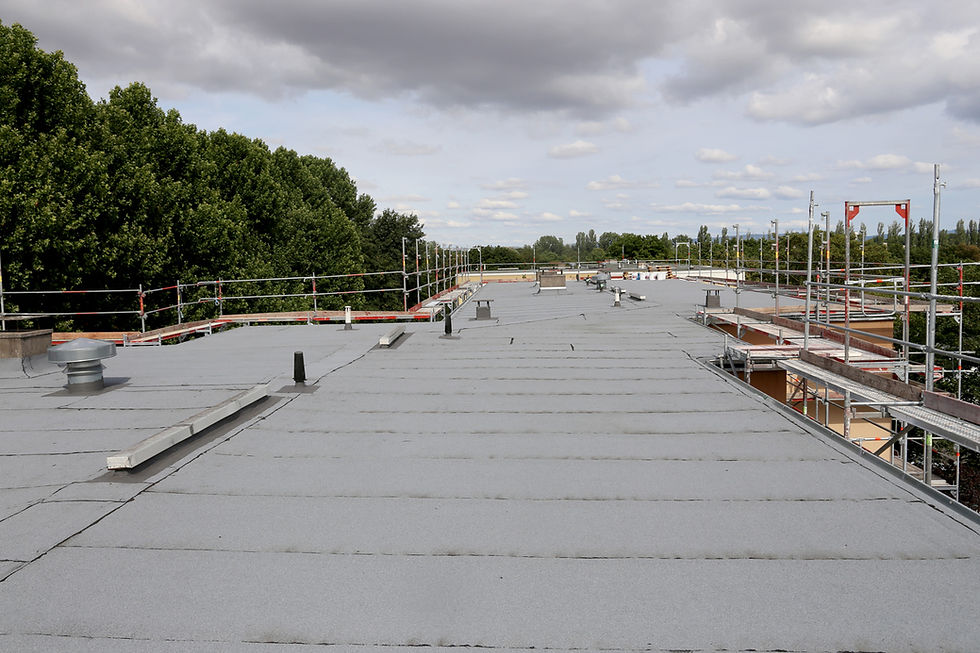
Calgary commercial stock skews heavily toward flat or low-slope roofs (under 2:12). Flat roofs depend on membrane integrity, slope to drains, and drain functionality. Any failure in one of those three is a leak event.
High-altitude UV
Calgary sits at 1,045 metres. UV degradation accelerates on TPO, EPDM, and PVC membranes versus prairie or central-Canadian averages. Manufacturer warranties built on national lab data routinely overshoot field performance in Calgary by 3 to 5 years.
Hail and wind
The 2020, 2021, and 2024 hailstorms produced generational claim volumes on Calgary commercial properties. Hail bruises modified bitumen and punctures aged single-ply systems. Wind events lift unsealed laps and tear flashings.
These four stressors compound. A roof with marginal drainage, a six-year-old TPO membrane, and a 2024 hail event will leak by year seven even though manufacturer literature would predict 15.
Early Signs of Commercial Water Damage
Commercial water damage rarely announces itself with a dramatic leak. It typically surfaces through small symptoms that have been developing for weeks.
The patterns property managers should track:
Ceiling stains that change shape. A stain spreading or shifting between weekly walks indicates an active leak path.
Drywall blistering, ceiling tile sag, or bowed tee bar. Acoustic ceilings absorb moisture invisibly until the tile fails.
Musty smell in HVAC supply air. Wet insulation or wet duct lining can distribute mould spores building-wide.
Tenant complaints clustered along one wall or unit. Single-tenant complaints often resolve quickly. Cluster complaints signal an envelope failure.
Drains that don't drain. Ponding more than 48 hours after rain or snowmelt indicates blocked or poorly-sloped drains.
Rust streaks on rooftop unit curbs. Curb-flashing failures lead to leaks under HVAC equipment.
Article 01 walks through the diagnostic logic in detail. The key principle: a roof problem visible from inside is rarely new. Treat any of these signs as a 30-day priority, not an annual to-do.
The 24-Hour Rule for Emergency Response
When water is actively entering the building, the response window is short.
Within the first hour, life-safety and electrical risks come first. Wet electrical panels, slip hazards, and overhead drips near tenants are addressed before any roofing action. Within four hours, interior containment (collection vessels, plastic sheeting, equipment relocation) limits secondary damage. Within 24 hours, a qualified vendor should be on the roof identifying the source and installing a temporary patch or tarp.
The 24-hour rule matters because:
Mould development begins between 24 and 48 hours of trapped moisture
Insurance carriers expect documented containment within the first day
Tenant lease language often references "reasonable response" timelines
Wet insulation that sits longer than 24 to 48 hours typically must be replaced
Article 03 provides a step-by-step emergency response sequence with HowTo schema. The default rule: contain interior first, then call the roofing vendor, then notify insurance.

Protecting HVAC, IT, and Inventory
The repair cost of a commercial leak is often dwarfed by equipment and inventory loss. Triage in this order:
Electrical first. Wet panels, switchgear, and exposed wiring create life-safety risk. De-energize and isolate before any other action. Coordinate with an electrician.
IT infrastructure second. Server rooms, network closets, and POS systems suffer rapid permanent damage from water exposure. Tarp, relocate, or power down servers if leak paths threaten the room.
HVAC third. Rooftop units (RTUs) take damage from above and from below. Above-grade water can short condenser controls. Below-grade water can rust curbs and saturate insulation around supply ducts. HVAC manufacturer warranties commonly exclude water-damaged components.
Inventory fourth. Tenant inventory, fixtures, and process equipment are often covered by tenant policies, not the building policy. Documentation matters for the eventual insurance triage.
Article 04 covers equipment protection in depth, including the multi-policy insurance interface.
Repair Scope: Membrane, Insulation, Deck, Interior
A complete commercial water damage repair has four layers.
Membrane. The water entry point itself, repaired with manufacturer-compatible patches, lap seam restoration, flashing replacement, or section replacement. Repair must match the existing membrane chemistry (TPO patches on TPO roofs; SBS patches on SBS).
Insulation. Polyiso, EPS, mineral wool, and similar commercial insulations do not dry once saturated. R-value loss is permanent. Wet insulation is replaced, typically in a cut-and-patch scope sized to the thermal scan footprint. Article 08 covers the replacement decision.
Structural deck. Metal decks rarely need replacement after a leak, though severely rusted deck flutes do. Plywood and OSB decks on older buildings can need cut-out and replacement when saturation lasted weeks.
Interior restoration. Ceiling tiles, drywall, insulation in interior walls, flooring, and paint. Most interior restoration is handled by a separate restoration vendor working in parallel with the roofing repair.
A reputable repair scope includes a written assessment with photos, itemized line items by layer, and a documented timeline. Repair scope can run 2 days to several weeks depending on size and tenant access constraints.
Ponding Water and Membrane Saturation
Ponding water is water that remains on the roof more than 48 hours after rainfall or snowmelt. In Calgary, ponding is more urgent than in warmer climates because freeze-thaw cycling turns standing water into ice loading and expansion damage cycle after cycle.
Sources of ponding:
Blocked or undersized drains and scuppers
Insulation sag creating low spots
Inadequate slope from original construction
Mechanical equipment additions that altered drainage patterns
Deck deflection from snow load or age
Ponding voids most manufacturer membrane warranties beyond a defined hours threshold (typically 48 to 72). It also masks the location of underlying leaks: water flows under standing pools until the assembly is fully saturated. Article 06 covers ponding diagnosis, the Calgary-specific freeze-thaw mechanics, and the repair options (drain relocation, taper insulation, cricket installation, full reslope).
Commercial Mould Risk
Mould develops in trapped moisture between 24 and 48 hours. Calgary commercial roofs that take a leak typically also trap moisture in batt insulation, suspended ceilings, and behind drywall. Mould risk is not theoretical, particularly when the leak goes undiscovered for days or weeks.
Angel's Roofing handles the roof side: source elimination, structural drying of the roof assembly, and assessment documentation. Active mould remediation, indoor air quality testing, containment, and clearance testing are handled by certified mould remediation specialists working to IICRC S520 standards. The two scopes run in parallel on a major event: the roofing vendor stops and dries the water source, and the remediation vendor handles indoor air quality and surface cleanup.
Article 07 covers the handoff between vendors, when tenants need to be relocated, and how insurance treats mould remediation. Use Canadian spelling: "mould".
Insurance and Business Continuity
Commercial water damage claims involve more policies than residential claims. The typical layers:
Building policy
Covers the structure, including roof, walls, and permanent improvements. Subject to deductible and exclusions.
Business interruption policy
Covers lost rental income (for owners) or lost business revenue (for owner-occupied buildings) during repair. Common on most commercial policies but not universal.
Equipment breakdown policy
Covers HVAC, electrical, and process equipment that fails as a result of water exposure. Often a separate rider.
Contents policy
Covers fixtures, furniture, and tenant improvements not classified as structural.
Tenant policies
Each tenant carries their own contents and business interruption coverage. Coordination with tenant insurance is the property manager's job.
Common exclusions that trip up claims:
Gradual leak versus sudden event (most policies cover sudden, not gradual)
Lack of maintenance documentation
Ponding water beyond a defined window
Pre-existing damage from a prior storm event
Article 09 covers Alberta-specific commercial water damage claim navigation, including documentation requirements, the 48-hour notification rule, and how to position a claim for first-submission approval.

Prevention Programs That Pay Back
Most Calgary commercial water damage events come from preventable causes: blocked drains, failed sealants, missed flashing maintenance, and unrepaired storm damage. When these issues progress, Calgary commercial roof water damage repair may involve source-level membrane repair, wet insulation replacement, deck drying or replacement, and related restoration work. A prevention program is the cheapest line on a commercial roof budget.
The components:
Biannual inspections. Spring (post-winter) and fall (pre-winter). Written reports with photos. Roughly $0.05 to $0.30 per sq ft.
Drain and scupper maintenance. Cleaned twice yearly minimum, more often on roofs with tree cover or industrial debris exposure.
Sealant and flashing program. Annual touch-up of UV-degraded sealants at curbs, terminations, and penetrations.
Post-storm rapid response. Inspection within 7 to 14 days of any major hail or wind event.
Snow load management. Drift monitoring at parapets and mechanical curbs. Removal protocol when load thresholds are exceeded.
Article 10 builds out the full prevention program with HowTo schema and includes the budget submission framing for ownership or board approval.
Frequently Asked Questions
Can my building stay occupied during commercial water damage repair?
Usually yes, with some restrictions. Most commercial repairs allow continued tenant operations with localized work zones. Occupancy restrictions apply when electrical risk, structural concern, or active mould remediation requires temporary tenant relocation. The property manager, the roofing vendor, and (if relevant) the remediation vendor coordinate the work plan to minimize disruption.
How long does commercial water damage repair take?
Emergency containment runs hours. Full repair runs 2 days to several weeks depending on scope. A typical mid-scope job (membrane patch, wet insulation replacement under 500 sq ft, interior restoration of one office) runs 1 to 2 weeks. Major events with structural deck damage, large insulation replacement, and multi-tenant interior work can run a month or more.
Does insurance cover business interruption?
Most commercial property policies include business interruption coverage, but the structure varies. Owner-occupied buildings claim lost revenue. Owner-landlord buildings claim lost rental income. Standalone tenants claim through their own policies. Coverage limits, waiting periods (typically 24 to 72 hours), and exclusions vary by policy. Confirm with your broker before a claim is filed.
Who pays when a tenant's contents are damaged?
In most cases, the tenant's own contents and business interruption policies. Building insurance typically covers the structure and tenant improvements classified as part of the building, not the tenant's inventory, fixtures, or process equipment. The lease language defines the boundary. Multi-tenant claims often involve simultaneous claims on the building policy and one or more tenant policies.
Will the building need a mould inspection?
If the leak went undetected for more than 24 to 48 hours, or if any saturated material remained in place beyond that window, an indoor air quality assessment is the standard recommendation. The assessment is performed by a certified remediation specialist, not the roofing vendor. Findings drive the scope of remediation that follows.
Can the leak source be found without tearing out the ceiling?
Often yes. Thermal imaging from the roof side can identify wet insulation footprints and water migration paths. Roof-side dye testing or water testing can confirm entry points without interior intrusion. Tear-out is typically required only when the entry path is concealed by complex construction or when interior damage requires restoration anyway.
What if the leak surfaces months after a storm?
Most Alberta commercial policies allow claim filing within 1 to 2 years of the loss event. Late-filed claims require strong documentation tying the damage to the original event. A written contractor assessment with photos and a damage-progression timeline supports a late-filed or supplemental claim.

About Angel's Roofing: Angel's Roofing provides Calgary commercial roof water damage repair throughout Calgary and surrounding areas, specializing in rapid source-level repair, wet insulation replacement, and written assessment reports for property managers requiring trusted protection of their assets and tenants.
Ready to contain and resolve a commercial water damage event on your building? Angel's Roofing helps Calgary property managers and building owners protect business continuity with 24/7 emergency response, GAF, IKO, Malarkey, and Euroshield certified repairs, drone and thermal imaging diagnostics, and 25+ years of Calgary commercial roofing experience.
Contact us today at 403-569-2643 to deploy emergency containment or book a full damage assessment.
Disclaimer: Roofing involves safety risks; consult licensed professionals for work beyond ground-level visual checks. Costs and specifications provided are estimates based on typical Calgary market conditions and may vary based on specific project requirements and current material pricing.

Comments