
Ice Dam Damage Repair (Calgary Climate-Specific Guide)
- Angel's Roofing

- 2 hours ago
- 7 min read

Quick Answer: Ice dams form when attic heat melts roof snow, refreezing at cold eaves and forcing meltwater back under shingle courses. Ice dam damage repair typically addresses the resulting lifted shingles, torn underlayment, fascia and soffit rot, deformed gutters, and interior wall water marks. Repair scope includes shingle replacement at the eave, underlayment patching, fascia work, gutter realignment, and (critically) root cause attention to attic insulation and ventilation. Calgary ice dam repair typically costs $1,500 to $4,500.
Ice dams are a Calgary specialty problem. The combination of warm attics (often from older insulation patterns), heavy winter snow loads, and the city's swing between deep cold and warm Chinooks creates ideal dam conditions. The damage itself isn't always visible during winter. Most ice dam damage surfaces in spring after the dam fully thaws and the resulting compromise becomes apparent. This guide covers the damage patterns, the right repair timing, scope of work, and the insulation and ventilation fixes that prevent recurrence.
At a Glance
Ice dam formation cause: Warm attic + snow on roof + cold eaves
Calgary ice dam season: December through March
Damage assessment timing: March (post-thaw) through April
Repair completion target: Before May rains
Typical repair cost range: $1,500 to $4,500
Root cause repair add-on (insulation + ventilation): $1,500 to $3,500
Damage types most common: Lifted shingles at eaves, underlayment tears, fascia rot
Without root cause repair: Same damage returns next winter
Insurance coverage: Sometimes; depends on insurer treatment of "ice and snow" peril
Key Takeaways
Ice dam damage usually surfaces in spring, not winter. Schedule the assessment for March or early April after the dam thaws.
Repair the symptom and the cause together. A visible repair without insulation and ventilation improvement guarantees recurrence.
Calgary's 2024 code requires more ice-and-water shield at eaves. Bring the underlayment up to current standard during repair.
Don't chip or torch the dam during winter. It damages shingles and creates safety hazards. Manage the interior water and wait for thaw.
Insurance coverage is inconsistent for ice dam damage. Most policies cover sudden water damage; ice dam damage often falls in a grey zone that varies by insurer. Document everything and consult your policy.
The full project (visible damage + root cause) typically runs $3,000 to $8,000. Splitting the budget between the two ensures the repair lasts.
How Ice Dams Form
Understanding formation explains both the damage and the repair priorities.
Step 1. Heat from the home rises into the attic. If attic insulation is insufficient or air-sealing is poor, the attic warms.
Step 2. The warm attic warms the underside of the roof deck. Snow on the roof melts from below.
Step 3. Meltwater runs down the roof slope toward the eave.
Step 4. At the eave (which extends past the heated interior), the deck is colder. Meltwater refreezes when it reaches the cold zone.
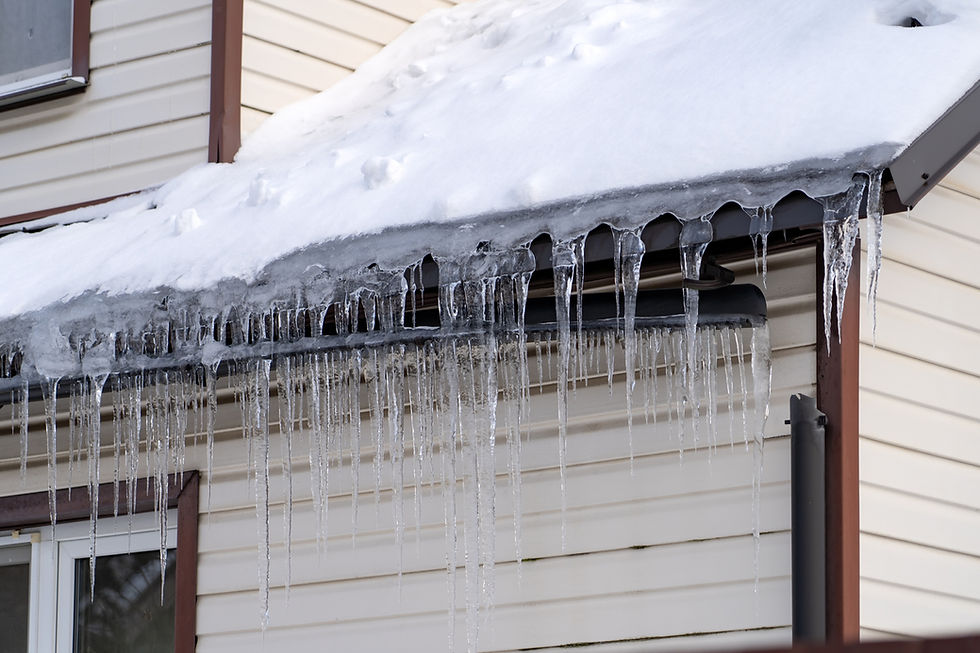
Step 5. Refrozen ice accumulates as a ridge or dam at the eave.
Step 6. Subsequent meltwater hits the dam, pools behind it, and works back under the shingle courses since shingles are designed to shed running water, not standing water.
Step 7. Water enters the underlayment or directly into the deck, then into the attic or down into wall cavities.
The asymmetry between warm interior and cold exterior at the eave is the root condition. Address that and dams largely don't form.
Damage Types After the Dam Thaws
Most ice dam damage isn't visible during winter. It surfaces in spring as the snow and ice clear.
Lifted or pried-up shingles at the eave
Ice expansion under the courses lifts shingles. Even when ice fully melts, the shingles often don't reseal.
Torn underlayment
Water and ice expansion can puncture or tear the underlayment beneath the shingles, exposing the deck.
Fascia and soffit rot
Persistent water at the eave can soak the fascia board and soffit. The damage often shows as paint blistering, soft wood when probed, or visible rot.
Eavestrough deformation
Heavy ice weight pulls gutters away from the fascia or deforms gutter sections. Bent gutters drain poorly even after the ice is gone.
Interior water staining
On exterior walls below the eave, water that entered the wall cavity from a compromised eave may show as staining at the top of interior walls or on ceilings near the wall junction.
Insulation damage
Wet insulation loses R-value and supports mould growth. Damage often discovered only when accessing the attic for the visible repair.
Decking damage
Repeated freeze-thaw water entry over multiple seasons can rot the deck at the eave, requiring sheet replacement.

Repair Timing
Calgary's ice dam season runs December through March. Damage assessment timing is critical.
During the dam (winter). Don't repair. Don't chip the dam off. Don't use a chainsaw, ice pick, or torch on the roof. These approaches damage shingles and create immediate safety hazards.
During the dam (interior intervention). If active water is entering, focus on interior containment and reducing the heat source feeding the dam. Open the attic hatch slightly to release rising heat from the home below; the temporary attic cooling slows further melt.
Post-thaw assessment (March, sometimes early April). Once the dam has melted naturally, the damage scope becomes visible. This is the time for a written assessment.
Repair window (April, sometimes late March). Calgary's weather supports roof repair from April through October. Address ice dam damage before May rains so the repaired roof handles the wet season properly.
Root cause work. Insulation and ventilation improvements can be done year-round and are best scheduled for the same project window as the visible repair.
Repair Scope
A comprehensive ice dam repair addresses both the visible damage and the underlying conditions.
Visible damage repair:
Replace lifted shingles at the eave (typically 1 to 3 courses depending on damage)
Patch or replace underlayment in affected sections
Repair or replace fascia boards as needed
Repair or replace soffit panels showing rot
Re-pitch or replace deformed eavestrough sections
Patch any decking rot
Repair interior wall or ceiling damage
Root cause repair (highly recommended):
Add or upgrade attic insulation to current R-50 standard
Improve attic ventilation (soffit-to-ridge airflow)
Air-seal attic penetrations (around plumbing, electrical, recessed lights)
Add or improve baffles at soffit vents to maintain airflow under insulation
Consider ice-and-water shield underlayment extension during shingle replacement (now required by Calgary 2024 code in eave zones)
Why root cause matters: A visible repair without root cause work guarantees the same dam returns next winter. The visible damage gets fixed, the dam re-forms, the damage recurs. Addressing insulation and ventilation typically prevents recurrence for the remaining roof life.
Calgary Code Implications
Calgary's 2024 building code update increased ice-and-water shield requirements at eaves. During an ice dam damage repair, bringing the eave underlayment up to current code is the practical default even when not legally required for repair scope.
Ice-and-water shield is a self-adhering rubberized membrane installed under shingles at vulnerable areas (eaves, valleys, around skylights). It seals around nail penetrations and prevents water entry even when ice forces water back under shingle courses.
Adding ice-and-water shield to the eave during repair is a $200 to $500 incremental cost that dramatically reduces future ice dam damage risk.
Insurance Treatment of Ice Dam Damage
Ice dam coverage is one of the more variable insurance areas.
Coverage favourable factors:
Sudden damage from an identifiable event (heavy snowfall event followed by warm spell)
Interior water damage with no prior leak history
Damage exceeds deductible
Coverage unfavourable factors:
Multi-season pattern of ice dam damage (suggests known maintenance gap)
Damage attributable to insufficient insulation or ventilation (sometimes excluded as maintenance issue)
Pre-existing damage not previously reported
Policy language to check:
"Ice damming" specifically named in coverage or exclusions
"Sudden and accidental" water damage clauses
Maintenance exclusions
A contractor's written assessment with photos and damage timeline supports the claim. Insurance adjusters often look for evidence the homeowner addressed root cause; documented insulation and ventilation work supports the claim for current damage and protects against future claim denial.
When Ice Dam Damage Pushes Toward Replacement
For roofs over 15 years old, multi-season ice dam damage often shifts the math toward full replacement.
Indicators that replacement is the better choice:
Repair scope covers more than 30% of the roof area
Underlayment is broadly compromised
Decking shows multi-sheet damage
The roof is over 18 years old with general end-of-life signs
This is the second or third major ice dam damage repair
The repair-vs-replace article in this cluster covers the full decision framework. For ice dam damage specifically, the answer often involves combining the replacement project with the insulation and ventilation upgrade so the new roof doesn't repeat the dam cycle.
Frequently Asked Questions
Can I prevent ice dams without a major insulation project?
Sometimes. Improving attic ventilation, sealing major air leaks around plumbing and electrical penetrations, and adding insulation in targeted high-loss areas can reduce dam formation. Heat cables along the eaves can also help in cases where insulation work isn't feasible. The right combination depends on the specific home and a written assessment.
Should I rake snow off my roof during winter?
A roof rake used from the ground to clear the lower 4 to 6 feet of snow can reduce dam formation by removing the snow available to melt. Don't go on the roof during winter; the combination of snow, ice, and pitch is dangerous. Roof rakes are safe and effective when used from the ground.
What's the difference between an ice dam and icicles?
Icicles can form from gutter overflow, dripping eaves, or partial dam melt. A full ice dam is a continuous ridge of ice along the eave behind which water pools. Small icicles aren't always dam evidence; large continuous ice formations along the eave are.
Does my homeowner insurance cover ice dam damage?
Sometimes. Coverage varies by policy and insurer. Sudden interior water damage from a clearly identifiable winter event is more likely covered than damage from chronic ice dam patterns. Document everything and ask your insurer specifically about the "ice damming" peril.
Will adding insulation alone stop ice dams?
Insulation reduces heat loss to the attic, which reduces the warm-attic side of the formation equation. Ventilation matters equally: even with adequate insulation, an under-ventilated attic stays warmer than the eave and forms dams. Both insulation and ventilation usually need attention.
Can heat cables solve the problem?
Heat cables along the eaves melt channels through dams to let water drain. They work but use significant electricity and need annual setup. They're a workable solution for homes where insulation work isn't feasible (older homes with complex roof geometries, for example), but they treat the symptom rather than the cause.

About Angel's Roofing: Angel's Roofing provides Calgary residential roof repair throughout Calgary and surrounding areas, specializing in ice dam damage repair, attic insulation and ventilation assessment, and underlayment upgrades to current Calgary code for homeowners requiring lasting protection from Calgary's winter conditions.
Ready to repair ice dam damage and prevent it from returning next winter? Angel's Roofing helps Calgary homeowners protect their investment with comprehensive assessments covering both visible damage and root cause conditions, GAF, IKO, and Malarkey certified shingle work, and full-time safety coordination on every project.
Contact us today at 403-569-2643 to book your complimentary ice dam damage assessment.
Disclaimer: Roofing involves safety risks; consult licensed professionals for work beyond ground-level visual checks. Costs and specifications provided are estimates based on typical Calgary market conditions and may vary based on specific project requirements and current material pricing.


Comments