
Ice Damming and Eavestrough Damage in Calgary


Quick Answer: Ice dams form when warm air leaks from the attic, melts roof snow, and the meltwater refreezes at the cold eaves and gutters. In Calgary, this damages eavestroughs by adding heavy ice loads that pull gutters off the fascia, cracking downspouts, and forcing water behind shingles. The fix is attic insulation (R-50+) and ventilation, not heat cables or gutter changes. Address ice damming before the next freeze-thaw cycle to prevent recurring eavestrough replacement.
Ice damming is the single most common cause of winter eavestrough damage in Calgary. The Chinook-driven melt-freeze cycle that defines Calgary winters creates ideal conditions for ice dam formation, and the damage compounds year over year if the underlying attic conditions aren't corrected. This article explains how ice dams form, what damage they do to your gutter system specifically, why the fix isn't in the gutter at all, and what Calgary homeowners can do this winter and next summer to prevent recurrence. By the end, you'll understand whether you have an ice damming problem, what's causing it, and the sequence of fixes that actually work.
At a Glance
Calgary attic insulation target: R-50 or higher (R-60 ideal in newer builds)
Ventilation requirement: 1 sq ft of net free vent area per 300 sq ft of attic floor
Heat cable cost: $300 to $1,500 installed depending on length and complexity
Ice removal pro service: $300 to $800 per visit
Typical ice-damaged gutter repair: $400 to $1,200 per section
Full eavestrough replacement after ice damage: $2,000 to $3,500 typical
Best ice prevention timing: insulation and ventilation upgrades in summer or fall
Chinook freeze-thaw count: Calgary averages 100+ above-zero to below-zero cycles per winter
Key Takeaways
Ice damming is an attic problem disguised as a gutter problem. The fix is insulation and ventilation, not gutter modifications.
Calgary's Chinook melt-freeze cycle accelerates ice formation. Most cities don't have the same intensity of repeated freeze-thaw.
Eavestrough damage is the visible casualty; soffit, fascia, and roof leaks are often the bigger expense. Address the underlying cause to prevent annual repair cycles.
R-50+ attic insulation and balanced ventilation are the durable fix. Combined cost of $2,500 to $5,500 often pays back through heating savings alone.
Heat cables are symptom management. Useful as temporary protection while you plan the real fix.
Safe ice removal uses calcium chloride socks, roof rakes from the ground, or pro steam service. Never use hammers, picks, or open flame.
How Ice Dams Form
Ice damming is a heat-transfer problem disguised as a gutter problem.
The sequence:
Warm air leaks from the heated living space into the attic
Attic air heats the underside of the roof deck
Snow on the warm part of the roof melts
Meltwater flows down the roof toward the cold eaves
At the eaves (which sit over unheated soffit), the temperature is well below freezing
The meltwater refreezes, forming an ice ridge
More meltwater backs up behind the ice ridge
Eventually, meltwater works its way under the shingles and into the home
Calgary's Chinook pattern accelerates this. A warm day melts a lot of snow quickly; the next cold night refreezes it all into ice. Repeated through a single winter, this builds substantial ice loads at the eaves.
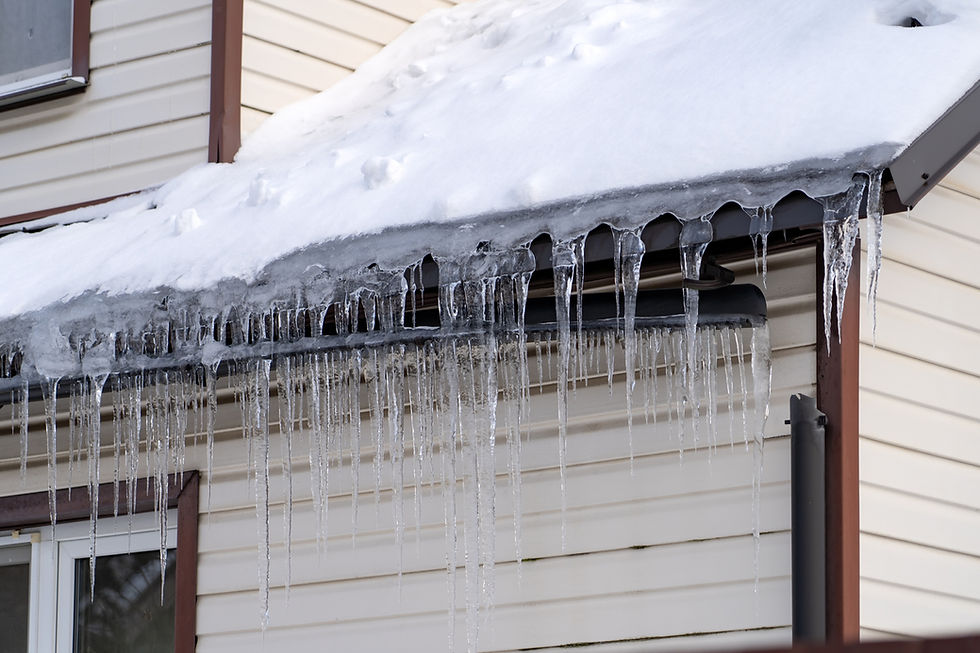
What Ice Damming Does to Eavestroughs
Eavestroughs sit at exactly the wrong place to avoid ice dam consequences.
The damage patterns:
Ice weight pulling gutters from fascia. A 20-foot section of gutter filled with ice can weigh 200 to 400 pounds. Hangers stress beyond design load. Fascia screws pull out. The gutter sags or detaches entirely.
Downspout cracks from ice expansion. Water freezing inside a downspout expands. Aluminum downspouts split at seams (especially at elbows). Steel downspouts deform at joints.
Fascia rot from backed-up water. Meltwater that should have flowed into the gutter instead sits on the fascia for hours or days. Repeated through winter, the fascia rots from behind.
Soffit damage. Ice that forms in the soffit area (where downspouts connect) can buckle soffit panels and dislodge soffit vents.
Shingle lift. Water backed up under shingles at the eaves dislodges sealant and lifts shingles. The damage appears in spring as missing shingles or roof leaks.
Interior water damage. Severe ice dams can push meltwater into the attic, where it stains ceilings, soaks insulation, and creates mould.
The eavestrough is the visible casualty. The real damage is often higher up in the soffit, attic, and roof system.
Why It Happens More in Some Homes
Two homes on the same street can have dramatically different ice damming behaviour. The variables:
Attic insulation level. Homes built before 2000 often have R-20 to R-30 in the attic. Calgary's current building code recommends R-50+. Under-insulated attics let heat escape, melt roof snow, and create ice dams.
Attic ventilation. A balanced attic ventilation system (intake vents in soffits, exhaust vents at the ridge or upper roof) keeps the attic temperature close to outside ambient. Poor ventilation traps heat. Mixed-orientation roofs (hip roofs) often have ventilation gaps that aren't visible from below.
Attic bypasses. Recessed light fixtures, plumbing stacks, attic hatches, and bath fan vents that aren't air-sealed leak warm humid air into the attic. Each bypass adds heat.
Snow load and exposure. South-facing roofs see more sun-driven melt and refreeze cycles than north-facing. Trees nearby that drop snow onto the roof concentrate load.
Roof complexity. Multiple valleys, dormers, and skylights all create thermal anomalies that produce localized ice dams.
The Real Fix: Attic, Not Gutter
The eavestrough is the symptom. The attic is the cause. The actual fix sequence:
Step 1: Seal attic bypasses. Air sealing around light fixtures, plumbing stacks, electrical penetrations, and the attic hatch. Cost: $400 to $1,500 for a typical home. Often the highest-impact single fix.
Step 2: Upgrade insulation to R-50+. Blown cellulose or fibreglass over existing insulation. Cost: $1,500 to $3,500 for a typical Calgary attic. Pays back in heating bills as well as ice prevention.
Step 3: Verify ventilation balance. Calculate net free vent area; ensure intake (soffit) and exhaust (ridge or upper) are roughly balanced. Add vents if undersized. Cost: $500 to $2,000.
Step 4: Install ice and water shield at next roof replacement. Calgary's 2024 building code expansion requires ice and water shield from the eave up at least 24 inches inside the warm wall line. Existing roofs without proper coverage stay vulnerable until next replacement.
This sequence usually solves ice damming permanently. Spot fixes (heat cables, ice removal) manage symptoms but don't prevent recurrence.
Heat Cables: Symptom Management, Not Cure
Heat cables (also called heat tape or de-icing cables) are electric resistance cables installed along the eaves and in the gutter. They keep a melt channel open so meltwater can drain past the ice formation.
What they do well:
Prevent the worst ice damming damage on existing roofs while you save for the insulation fix
Useful on north-facing eaves and complex roof areas where insulation alone may not solve it
Reduce gutter and downspout ice loads
What they don't do:
Fix the underlying attic problem
Prevent all ice formation
Work without electricity (a power outage during a freeze can let dams form rapidly)
Costs:
Installation: $300 to $1,500 depending on length and complexity
Operating cost: $30 to $80 per month during cold periods
Lifespan: 5 to 10 years on most products
For homes with severe ice damming and no immediate budget for full insulation upgrades, heat cables are a legitimate temporary tool. They shouldn't be the long-term solution.

Safe Ice Removal
If you have active ice damming this winter, do not climb on a snowy roof or use a hammer on the ice.
Safe options:
Calcium chloride socks. Fill nylon stockings with calcium chloride pellets and lay them perpendicular across the ice dam from a safe ladder position. The chloride melts a channel for meltwater to drain through. Avoid rock salt; it damages aluminum and shingles.
Roof rake. A long-handled roof rake removes snow from the eaves while you stand on the ground. Remove snow before ice forms; you can't rake away ice that's already formed.
Pro service. Steam-based ice removal services use low-pressure steam to melt ice without damaging shingles or gutters. Cost: $300 to $800 per visit. Avoid services that use high-pressure water or mechanical chipping; both damage roofing.
Avoid:
Pickaxes, hammers, ice picks (damage shingles and gutters)
Open-flame torches (fire risk, shingle damage)
Climbing on snow-covered or icy roofs (fall risk)
Frequently Asked Questions
Should I salt my gutters?
Use calcium chloride only, never rock salt. Rock salt damages aluminum and shingles. Calcium chloride pellets in nylon socks create a melt channel without damaging materials. Apply from a stable ladder, not while standing on a roof.
Will heated cables fix my ice damming?
They reduce the symptoms but don't fix the cause. Cables keep a melt channel open at the eaves so water can drain past the ice. They don't address the warm attic conditions creating the ice. Use as a temporary tool while planning insulation upgrades.
Is ice damage covered by insurance?
Often, yes, but with caveats. Sudden and accidental ice damage to the interior of the home (ceiling stains, soaked insulation, ruined floors) is usually covered. Maintenance-related issues (long-term eavestrough sag from repeated ice loads, fascia rot from years of damage) often aren't. Check your specific policy.
How long does an attic insulation upgrade take?
A typical Calgary blown-insulation upgrade is a half-day to full-day job. Includes air sealing, baffles at the soffit to maintain ventilation, and topping up to target R-value. Most homes can be insulated without removing existing insulation.
Will gutter guards prevent ice damming?
No. Some guards make ice removal harder by trapping ice on the guard surface. Ice damming is a thermal problem, not a debris problem. The guard-ice interaction is one reason to consider whether guards are right for your specific home.
Can I prevent ice damming on a single-storey home more easily than a two-storey?
Yes, because single-storey homes have shorter heat-transfer paths and simpler attic geometry. Most single-storey ice damming responds well to attic air sealing and insulation upgrades. Two-storey and complex roofs often need a more comprehensive ventilation review alongside insulation.

About Angel's Roofing: Angel's Roofing provides Calgary ice damming response and prevention throughout Calgary and surrounding areas, specializing in eavestrough damage repair, attic ventilation assessment, and integrated roof-and-gutter solutions for homeowners requiring long-term ice prevention.
Ready to stop ice damming from damaging your Calgary home each winter? Angel's Roofing helps Calgary homeowners with damage repair, ventilation review, and 25+ years of Calgary winter experience.
Contact us today at 403-569-2643 to book your ice damming assessment.
Disclaimer: Roofing involves safety risks; consult licensed professionals for work beyond ground-level visual checks. Costs and specifications provided are estimates based on typical Calgary market conditions and may vary based on specific project requirements and current material pricing.


Comments