
Commercial Mould Risk After Roof Water Damage

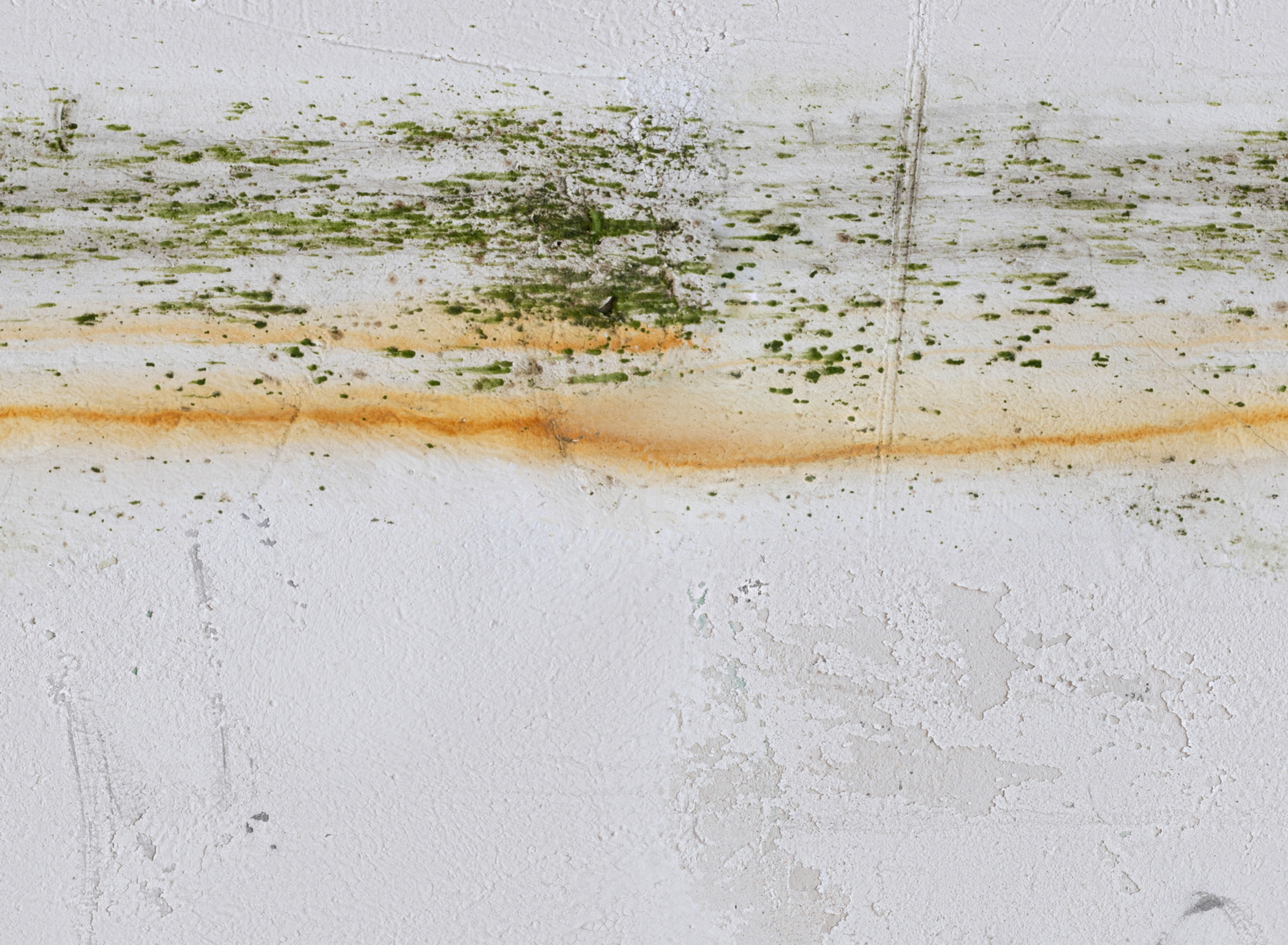
Quick Answer: Mould development in a commercial building starts within 24 to 48 hours of trapped moisture. After a roof leak, the roofing vendor stops the water source and dries the roof assembly. A certified mould remediation specialist working to IICRC S520 standards handles indoor air quality assessment, containment, surface remediation, and clearance testing. These are two separate scopes that run in parallel during a major water event.
A commercial water event creates two problems simultaneously: a roof to fix and an indoor environment that may now contain hidden moisture in walls, ceilings, insulation, and HVAC components. The roof problem and the mould problem need different vendors and different scopes of work. This article maps the mould risk window, the scope handoff between roofing and remediation, the indoor air quality (IAQ) implications for tenants, and the insurance treatment of mould events. Angel's Roofing handles the source-side work; certified mould remediation specialists handle the indoor remediation work.
At a Glance
Mould development window: 24 to 48 hours of trapped moisture
Roofing vendor scope: Source elimination, structural drying of roof assembly
Mould remediation scope: Indoor containment, surface cleanup, clearance testing (IICRC S520)
IAQ test trigger: Any leak undetected over 24 to 48 hours
Insurance coverage: Most policies limited or excluded for gradual mould; sudden-event remediation may be covered
Tenant communication: Required for any IAQ concern; transparency reduces friction
Key Takeaways
The 24- to 48-hour window is the critical mould risk threshold. Containment and drying inside this window prevent most mould events.
Angel's Roofing handles source repair; certified remediation specialists handle indoor cleanup. The IICRC S520 standard governs remediation scope, not roofing repair.
Mould develops invisibly in commercial assemblies. Suspended ceilings, wall cavities, HVAC insulation, and tenant fit-outs all create hidden incubation locations.
Tenant communication is non-negotiable. Silence creates more friction than disclosure. Document every conversation.
Sudden-event mould may be covered; gradual mould typically isn't. Documentation of the event timing protects coverage.
The two vendor scopes run in parallel, not sequentially. Roofing repair and mould remediation happen simultaneously on major events.
The 24- to 48-Hour Mould Risk Window
Common indoor mould species (Aspergillus, Penicillium, Cladosporium, Stachybotrys) begin colonizing wet organic materials between 24 and 48 hours of sustained moisture at room temperature. Calgary commercial building materials provide ideal substrates: paper-faced drywall, fibreglass batt and acoustic ceiling tile, organic dust on metal surfaces, and tenant contents (cardboard, fabric, paper records).
The window is environmental, not absolute. Faster colonization happens with:
Higher temperature (above 21C)
Higher humidity (above 60%)
Existing dust or organic load on surfaces
Lower air movement (still pockets dry slower)
Slower colonization happens with:
Lower temperature
Active drying (dehumidifiers, air movers)
Recently-cleaned surfaces with minimal organic load
The practical rule: assume the 24- to 48-hour window applies, and act inside it. A leak discovered, contained, and dried within 24 hours rarely produces a mould event. A leak undetected for a week almost always does.
Where Mould Develops in Commercial Roof Assemblies
The hidden locations:
Suspended ceiling cavity. Acoustic ceiling tiles, supporting tee bar, and the cavity above all absorb moisture. Mould develops on the upper surface of tiles, on suspended ductwork insulation, and on conduit and pipe insulation.
Wall cavities below the roof. Water tracking down inside wall systems wets batts insulation and drywall back faces. Tenants can't see the development; the symptom is a musty smell from receptacles or wall outlets.
HVAC duct insulation. Internal duct lining (where used) and external duct insulation can absorb moisture and distribute spores building-wide when the system runs.
Insulation above the deck (cold-side condensation). In some roof assembly configurations, condensation forms on the underside of the deck and saturates the insulation just below. The mould develops invisibly inside the assembly.
Tenant fit-out cavities. Built-in millwork, kitchen cabinets, washroom partitions, and storage units all create dead spaces where moisture can collect, and mould can develop.
A visual inspection alone misses most of these locations. A certified mould remediation assessment uses moisture meters, borescope cameras into wall cavities, and air sampling to identify the actual scope.

Why Roof Repair and Mould Remediation Are Separate Scopes
The two scopes use different standards, different trades, and different deliverables.
Roofing vendor scope:
Stop the water source (membrane repair, flashing, drainage)
Document the roof condition for insurance
Coordinate with the remediation vendor on access and timing
Mould remediation vendor scope (IICRC S520):
Initial moisture and IAQ assessment
Containment of work areas (plastic barriers, negative air machines)
Surface cleanup and removal of compromised materials
Antimicrobial treatment where indicated
Post-remediation verification (PRV) air sampling
Clearance documentation
The standards differ. The roofing vendor works to manufacturer specs and provincial building code. The remediation vendor works to the IICRC S520 standard for professional mould remediation. The IICRC S520 standard governs scope, containment, worker safety, and clearance testing.
Angel's Roofing does not perform mould remediation. The work falls outside the roofing trade's scope, training, and certification. On any commercial event where the 24- to 48-hour window has passed, a certified remediation vendor should be engaged in parallel with the roofing repair.
Health and IAQ Implications
Mould exposure in commercial buildings creates several risk categories.
Tenant health complaints. Headache, respiratory irritation, allergic reactions, and asthma exacerbation are common reports during active mould events. Documentation of the complaints (date, tenant, symptoms) supports the claim file and the remediation scope.
WCB and worker safety. Tenant employees may file WCB claims if mould exposure is alleged as a workplace cause. Property managers responding to a water event have an interest in resolving the IAQ situation before complaints escalate.
Indoor air quality liability. Persistent mould without remediation can become a habitability issue under Alberta tenant law and standard commercial lease language. The tenant's recourse depends on lease terms, but well-documented landlord action (rapid containment, qualified remediation, clearance testing) substantially reduces exposure.
Vulnerable populations. Tenants serving medical, educational, or food-handling functions have heightened IAQ obligations. Commercial buildings hosting such tenants need higher standards of urgency and documentation.
The property manager's job is not assessing mould risk personally. It is engaging qualified vendors to assess and address the risk, communicating honestly with tenants, and documenting the action.
Coordinating the Two Vendors
A typical major event timeline:
Hour 0 to 24:
Roofing vendor on-site for source containment. Restoration vendor on-site for water extraction and initial drying. If the leak exceeds 24 hours, a remediation specialist is also engaged.
Day 1 to 3:
Roofing vendor completes temporary repair and identifies the wet-insulation scope via thermal imaging. Remediation vendor completes initial IAQ assessment, identifies the containment scope, and starts containment setup.
Day 3 to 14 (typical):
Roofing vendor performs wet-insulation replacement and permanent membrane repair. Remediation vendor performs containment, cleanup, and antimicrobial treatment in parallel within tenant spaces.
Day 14 to 21:
Remediation vendor completes post-remediation verification air sampling. Once clearance is achieved, the restoration vendor performs reconstruction (drywall, paint, ceiling tile, flooring).
Throughout:
Property manager coordinates trades, communicates with tenants, manages insurance claim documentation.
The roofing vendor and remediation vendor must share information actively. The roofing vendor's thermal scan footprint informs the remediation vendor's containment scope. The remediation vendor's wall-cavity assessment can identify additional moisture entry paths the roofing vendor missed.
Tenant Communication During a Mould Event
Tenants notice mould events. Smell, visible material, or restoration vendor activity all signal the event regardless of whether the property manager wants the topic discussed.
Communication practice:
Acknowledge the event within 24 hours of discovery
Identify the cause (roof leak, water source)
Identify the response (vendors engaged, scope of work)
Identify the timeline (estimated resolution date)
Identify the tenant's responsibilities (access, contents, their own insurance)
Communicate clearance results when received
Maintain a single point of contact for tenant questions
The single biggest tenant friction factor is uncertainty. Even bad news (extended restoration, equipment loss) is easier to manage than silence. Practice transparency, document the communication, and refer health questions to qualified medical providers (not the property manager personally).

Insurance Treatment of Mould
Mould insurance is policy-specific. For commercial properties, mould risk after roof water damage depends on the moisture source, exposure duration, and coverage terms. Wet insulation, ceilings, and roof assemblies can develop mould if drying and repairs are delayed.
Common patterns:
Sudden-event mould (caused by a covered water event) may be covered as part of the water claim, often up to a sub-limit
Gradual mould (from long-term seepage, condensation, or maintenance failure) is typically excluded
Mould-specific endorsements can extend or restrict coverage; the policy schedule controls
Remediation cost limits are common, ranging from $5,000 to $100,000+ depending on policy
Testing and assessment are sometimes covered separately from remediation labour
The 48-hour notification rule applies. Documenting the mould event timing (water source, discovery date, vendor engagement) supports the sudden-event coverage argument. Late discovery without documentation can shift the event toward gradual classification and reduce coverage.
Article 09 covers the full insurance interface; consult a broker on mould-specific coverage details for your policy.
Frequently Asked Questions
Can I use bleach to handle the mould myself?
No. Bleach is not recommended for porous building materials. It does not penetrate the surface to kill embedded growth, and the moisture it introduces can worsen the underlying problem. Active mould remediation on commercial properties is performed by certified specialists working to IICRC S520 standards. Surface bleaching by maintenance staff can also create worker exposure and liability issues.
Do I need to evacuate the building?
Only when remediation work scope, IAQ test results, or structural concern requires it. Most mould events allow continued occupancy with localized containment. The remediation vendor's IAQ assessment drives the evacuation decision.
When does insurance cover mould remediation?
When the mould is the direct result of a sudden covered water event and the policy contains mould coverage (not all do). The 48-hour notification window matters. Documentation of the water source, the leak timeline, and the immediate engagement of a remediation vendor supports the sudden-event coverage argument. Gradual mould is typically excluded across most policies.
How long does mould remediation take?
Small events (under 200 sq ft contained area) often run 3 to 7 days. Larger events run 2 to 4 weeks. Reconstruction (drywall, paint, ceiling, flooring) happens after remediation clearance and adds another 1 to 3 weeks. The full mould-and-restoration timeline commonly runs 4 to 8 weeks on a moderate commercial event.
Will mould affect lease renewal?
It can. Tenants who experience a poorly handled mould event are more likely to relocate at lease end. Tenants who experience a transparently managed event with documented professional remediation and clearance are more likely to renew. Communication quality during the event correlates strongly with retention.

About Angel's Roofing: Angel's Roofing provides Calgary commercial water damage repair throughout Calgary and surrounding areas, specializing in roof-source elimination and structural drying of roof assemblies for property managers requiring trusted protection of their assets and tenants. Indoor mould remediation is performed by certified specialists working to IICRC S520 standards as a coordinated parallel scope.
Ready to stop the water source and coordinate remediation on a commercial mould-risk event? Angel's Roofing helps Calgary property managers contain the source with rapid emergency response, thermal moisture scanning, GAF, IKO, Malarkey, and Euroshield certified repairs, and 25+ years of Calgary commercial roofing experience.
Contact us today at 403-569-2643 to dispatch Source Repair, coordinated with your remediation vendor.
Disclaimer: Roofing involves safety risks; consult licensed professionals for work beyond ground-level visual checks. Costs and specifications provided are estimates based on typical Calgary market conditions and may vary based on specific project requirements and current material pricing.


Comments